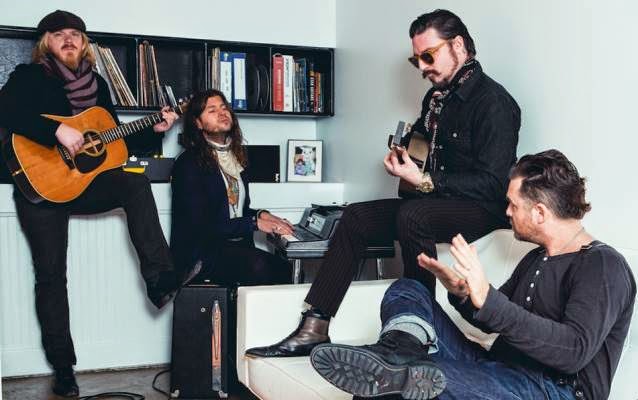
Grohl och The Stones visar var skåpet ska stå.
Från Anaheim igår 130518.
/Niclas
söndagen den 19:e maj 2013
fredagen den 17:e maj 2013
Boken om Hammerfall.
Förlaget Kalla kulor skriver följande om den kommande boken, "Legenden om Hammerfall":
"Hammerfall grundades av gitarristen Oscar Dronjak i Göteborg 1993. Gruppsammansättningen har ändrats flera gånger sedan dess, men Oscar och sångaren Joakim Cans har alltid varit bestående. I Legenden om Hammerfall beskriver Oscar bandets resa, från deras amatörmässiga medverkan i Rockslaget i tidernas begynnelse, till genombrottet med Renegade och resan från Mölndal till världens största rockscener.
Oscar Dronjak låter oss ta del av fantastiska framgångar och katastrofala motgångar. Han berättar ärligt, ironiskt och utan omsvep om de turbulenta åren i början av 2000-talet, skivinspelningen på Teneriffa där deras monsterhit Hearts on fire kom till (albumet sålde mer än 300000 exemplar över hela världen!), liksom hur Joacim blev nedslagen och nästan förlorade synen en vecka innan en stor videoinspelning.
han avslöjar också hur deras turnémanager stack med pengarna efter en lång USA-turné och inte minst hur han själv råkade ut för en allvarlig motorcykelolycka dagen före hemkomstkonserten i Sverige.
I Legenden om Hammerfall får musiken och hårdrocken ta all den plats den förtjänar. Vi får läsa om samarbetena, albumens uppkomst och vi bjuds ständigt på intressanta, roliga och uppseendeväckande anekdoter ur bandets historia."
Utgivning är satt till den 24:e oktober 2013 och boken är på ca. 300 sidor.
/Niclas
Förlaget Kalla kulor skriver följande om den kommande boken, "Legenden om Hammerfall":
"Hammerfall grundades av gitarristen Oscar Dronjak i Göteborg 1993. Gruppsammansättningen har ändrats flera gånger sedan dess, men Oscar och sångaren Joakim Cans har alltid varit bestående. I Legenden om Hammerfall beskriver Oscar bandets resa, från deras amatörmässiga medverkan i Rockslaget i tidernas begynnelse, till genombrottet med Renegade och resan från Mölndal till världens största rockscener.
Oscar Dronjak låter oss ta del av fantastiska framgångar och katastrofala motgångar. Han berättar ärligt, ironiskt och utan omsvep om de turbulenta åren i början av 2000-talet, skivinspelningen på Teneriffa där deras monsterhit Hearts on fire kom till (albumet sålde mer än 300000 exemplar över hela världen!), liksom hur Joacim blev nedslagen och nästan förlorade synen en vecka innan en stor videoinspelning.
han avslöjar också hur deras turnémanager stack med pengarna efter en lång USA-turné och inte minst hur han själv råkade ut för en allvarlig motorcykelolycka dagen före hemkomstkonserten i Sverige.
I Legenden om Hammerfall får musiken och hårdrocken ta all den plats den förtjänar. Vi får läsa om samarbetena, albumens uppkomst och vi bjuds ständigt på intressanta, roliga och uppseendeväckande anekdoter ur bandets historia."
Utgivning är satt till den 24:e oktober 2013 och boken är på ca. 300 sidor.
/Niclas
torsdagen den 16:e maj 2013
Timberlake spelar Neil Bogart.
Justin Timberlake, som tidigare visat talang som skådis i bl a The social network, spelar legendariske Neil Bogart (1943-82) i kommande filmen "Spinning gold".
Neil Bogart startade och drev Casablanca records and filmworks med KISS i spetsen.
Filmen kan säkert bli intressant med tanke på galenskapen inom skivbranschen på 70-talet.
Jag kan för övrigt rekommendera Larry Harris´ bok om livet på Casablanca, "And party every day".
/Niclas
Justin Timberlake, som tidigare visat talang som skådis i bl a The social network, spelar legendariske Neil Bogart (1943-82) i kommande filmen "Spinning gold".
Neil Bogart startade och drev Casablanca records and filmworks med KISS i spetsen.
Filmen kan säkert bli intressant med tanke på galenskapen inom skivbranschen på 70-talet.
Jag kan för övrigt rekommendera Larry Harris´ bok om livet på Casablanca, "And party every day".
/Niclas
Dregen ger ut självbiogarfi.
Släpps i september. Bogerius bok om Backyard babies är lysande. Frågan är om Dregens bok blir lika intressant? Dock är Tore S Börjesson en bra skribent så vem vet?
"En biografi över Dregen är en självklarhet. Han är en rockstjärna i ordets rätta bemärkelse en celebritet, en stilikon, en self-made-man som gav upp alla tankar på ett vanligt liv redan i mellanstadiet.
Dregen har aldrig haft en Plan B. Som originalmedlem i The Hellacopters gjorde han hård och kompromisslös rock hipp igen. Att Hellacopters vann en Grammis med sitt debutalbum Supershitty to the Max (1996) säger en del, att det spelades in på tjugosex timmar säger ännu mer. Två år senare gjorde Dregen om bedriften att vinna en Grammis; denna gång med sitt andra stora band, Backyard Babies, för albumet Total 13.
Dregens liv har allt det man vill ha av en biografi, de tre mytologiska benen sex, droger och rock'n'roll. Men även ett livslångt personligt drama som började när han vid 11 års ålder blev ögonvittne till att hans pappa hängde sig, och 2004 hamnade han och hans fru, artisten Pernilla Andersson Dregen, mitt i tsunamin.
Frälsningsarmén, Säpo, Hells Angels, kronprinsessan Victoria, tampongsvingande punkbrudar från Los Angeles, Guns N' Roses, AC/DC och många fler med dem. Dregen har hängt med dem alla och spelat med och för de flesta. Berättelsen om Dregens liv är ett bevis för att sanningen överträffar dikten."
/Niclas
Släpps i september. Bogerius bok om Backyard babies är lysande. Frågan är om Dregens bok blir lika intressant? Dock är Tore S Börjesson en bra skribent så vem vet?
"En biografi över Dregen är en självklarhet. Han är en rockstjärna i ordets rätta bemärkelse en celebritet, en stilikon, en self-made-man som gav upp alla tankar på ett vanligt liv redan i mellanstadiet.
Dregen har aldrig haft en Plan B. Som originalmedlem i The Hellacopters gjorde han hård och kompromisslös rock hipp igen. Att Hellacopters vann en Grammis med sitt debutalbum Supershitty to the Max (1996) säger en del, att det spelades in på tjugosex timmar säger ännu mer. Två år senare gjorde Dregen om bedriften att vinna en Grammis; denna gång med sitt andra stora band, Backyard Babies, för albumet Total 13.
Dregens liv har allt det man vill ha av en biografi, de tre mytologiska benen sex, droger och rock'n'roll. Men även ett livslångt personligt drama som började när han vid 11 års ålder blev ögonvittne till att hans pappa hängde sig, och 2004 hamnade han och hans fru, artisten Pernilla Andersson Dregen, mitt i tsunamin.
Frälsningsarmén, Säpo, Hells Angels, kronprinsessan Victoria, tampongsvingande punkbrudar från Los Angeles, Guns N' Roses, AC/DC och många fler med dem. Dregen har hängt med dem alla och spelat med och för de flesta. Berättelsen om Dregens liv är ett bevis för att sanningen överträffar dikten."
/Niclas
tisdagen den 14:e maj 2013
Lyssna på Orchids nya och köp sedan!
Orchids nya släpptes idag. Lyssna nedan och köp sedan ett fysiskt ex av plattan!
Downloading is for pussies.
Lyssna HÄR
/Niclas
Orchids nya släpptes idag. Lyssna nedan och köp sedan ett fysiskt ex av plattan!
Downloading is for pussies.
Lyssna HÄR
/Niclas
måndagen den 13:e maj 2013
Ny låt med A Pale Horse Named Death!
Lyssna på "The needle in you" via Metalsucks.net nedan.
APHND HÄR
/Niclas
Lyssna på "The needle in you" via Metalsucks.net nedan.
APHND HÄR
/Niclas
Tre nya låtar med QOTSA!
Tre låtar, "Keep your eyes peeled", "I sat by the ocean" och "If I had a tail" framförda live på en belgisk radiostation. Första låten är fenomenalt tung.
Lyssna HÄR
/Niclas
Tre låtar, "Keep your eyes peeled", "I sat by the ocean" och "If I had a tail" framförda live på en belgisk radiostation. Första låten är fenomenalt tung.
Lyssna HÄR
/Niclas
"Phantom limb" med Alice in Chains!
Sedan tidigare finns "Hollow" och "Stone" ute officiellt. Nu har även "Phantom limb" hittat ut, via Soundcloud. Lyssna och njut!
"Phantom limb" HÄR
/Niclas
Sedan tidigare finns "Hollow" och "Stone" ute officiellt. Nu har även "Phantom limb" hittat ut, via Soundcloud. Lyssna och njut!
"Phantom limb" HÄR
/Niclas
KISS ska ha en spindel på scen!
Enligt en snubbe på KISSFAQ, som tydligen besökte KISS Indy Expo i helgen, ska KISS´nya scenshow bl a inkludera en stor robotspindel som ska hasa runt på scen. Allt enligt mr Simmons, som även ska ha visat en bild på sin iPhone för samma snubbe. Om detta är sant eller ej tvista de lärde om.
Saxat från KISSFAQ´s forum:
"The new Kiss stage show will involve a giant robotic spider that will move across the stage and all four members will be lifted into the air. Also, the spider will shoot pyro from it's legs and its eyes will glow. Gene told us that it would be 100 percent new and not a rehashed stage where the amps and stairs are simply moved around and then called a new stage. This will be unique to Kiss and Kiss will give us a 100 percent new stage show."
/Niclas
Enligt en snubbe på KISSFAQ, som tydligen besökte KISS Indy Expo i helgen, ska KISS´nya scenshow bl a inkludera en stor robotspindel som ska hasa runt på scen. Allt enligt mr Simmons, som även ska ha visat en bild på sin iPhone för samma snubbe. Om detta är sant eller ej tvista de lärde om.
Saxat från KISSFAQ´s forum:
"The new Kiss stage show will involve a giant robotic spider that will move across the stage and all four members will be lifted into the air. Also, the spider will shoot pyro from it's legs and its eyes will glow. Gene told us that it would be 100 percent new and not a rehashed stage where the amps and stairs are simply moved around and then called a new stage. This will be unique to Kiss and Kiss will give us a 100 percent new stage show."
/Niclas
torsdagen den 9:e maj 2013
tisdagen den 7:e maj 2013
Intervju med Udo Dirkschneider.
För en tid sedan besökte Udo huvudstaden för lite promotion av senaste given "Steelhammer". Jag gjorde en kortare telefonare med den lille tysken och samtalade bl a om nya plattan, Spanien och om hur musik kan påverka människor positivt.
There are two new members in the band. Not only do they have to be great musicians, but there´s also the personal chemistry. Does it take long to kinda gel as a band?
Udo: No, not really. In a way I was lucky and I think I have a way of picking the right ones. (laughs) Stefan´s health problems were getting a little bit too much now and he needed to stop touring. We nearly got 300 demo tapes and in the end I had four guys, one from Norway, Germany, Finland and Russia. We picked up Andrey first and the plan was then to continue with him and Igor. I told Igor that I wanted to change things and I wanted all the members in the studio and work with everybody face to face. I told him he had to be in the studio for four to five weeks, but he said it was too much. “Maybe I can come in for two days.” he said, but I said it was not possible. Andrey came for the audition and it lasted for four weeks, which was very long, but he played very well and is a nice person so I feel very comfortable with him. Then we talked with Igor at the beginning of the year when the album was done and asked him what he wanted to do? He said “Well, maybe it was wrong of me not to do the album.”, but then we got an e-mail that said he was out of the band. I asked him “Igor, are you sure you wanna throw away 15 years?” and he said “Yeah, I think it´s better for me.”. I had Kasperi in mind, so we called him and wondered if he was still available and within an hour we had a new guitar player. Our first show was a festival in Ecuador and it just feels like we´ve been together for a long time. It´s crazy, but it´s fresh blood. They´re young, Andrey´s 29 and Kasperi´s 31, so they´re from a different generation. At the moment I´m really happy.
With Andrey and Kasperi in the band, your band is starting to look like the UN.
Udo: Yeah, in a way. (laughs) We have Russia, Finland, Italy and a guy from Germany living in Spain. (laughs)
There´s a song on the new album “Steelhammer” called “Basta Ya”, and you sing in Spanish. What´s the story there? I googled it and found out that it kinda means enough is enough, but it´s also an organization working against terrorism.
Udo: It wasn´t planned to be done in Spanish. It´s about the financial crisis that´s been happening. I was having breakfast one morning, watching the news and there were so many demonstrations going on in Spain and there were signs saying “Basta Ya”. Fitty came up with the idea. We did some demos in Spanish and it sounded great. Then we called up our friend Victor Garcia from Warcry and asked him if he could translate the lyrics from English to Spanish. He did that. It took three days and he sang it so we got everything right. I thought it sounded great and said “Let´s do a duet!” and that´s the story of “Basta Ya”.
Did you know much Spanish before this?
Udo: Yeah, I´ve lived in Spain for five years now and I understand a lot and I can speak the language. Not fluent, but enough to live there.
What made you move to Spain?
Udo: Private reasons, but I have no problem talking about it and there are three songs on this album about my wife, or ex wife. She left me after 25 years and was falling in love with somebody else and that was the reason I moved. I moved to place where I´ve always liked to be and that was Spain.
Spain´s not doing too good these days, as aren´t a lot of other European countries. Is it difficult living there now?
Udo: No, not for me. I have nothing to do with all that. It´s different for me. A lot of people are losing their jobs and I think something like 45% of the young people don´t have a job. The economy is going down and I think it´s good to do a song like this one, because it´s not only Spain, it´s also Greece, Italy and so on. There´s also a lot of things going on in South America.
Are you in any way politically involved? It seems like your keeping track of what´s going on?
Udo: I´m interested, yes, but I´m not involved in anything. There are so many things going on everywhere and when you´re watching the news, you get tons of ideas for lyrics. The song “A cry of the nation” is about the rich getting richer and the poor getting poorer. There´s no middleclass anymore. I always try to write lyrics about what´s happening in the world and the song “Metal machine” is about how robots are taking over more and more. They do the work and people are losing their jobs and it´s also everything with the internet and computers. For me, it´s getting to be a little too much.
You travel a lot and you get to see a lot of countries and I guess you also see where there´s trouble and such?
Udo: Yeah. A very interesting country was Ecuador, where we played a festival. It´s a beautiful country but you see how people live there. It´s poor and you don´t think people can live like that, but they´rereally happy and of course they don´t know anything else. It´s hard to see how they live, but it gives you ideas to maybe write something.
You also get to see what music can do for people and how it can lift someone´s spirits and give a positive vibe to people. It has to be pretty cool to see that your music can help people forget their troubles, at least for an hour or two hours?
Udo: Oh yeah, definitely. It´s important to give people a good time. They come, have a party and go home with a smile. They forget that they have a job they´re not happy with or other problems they have. When I o to a concert or to the cinema, I wanna forget problems too. That´s why we are doing this.
With the new album, you stay true to your sound. Do you ever feel that you would like to try something completely different or is that too risky?
Udo: Of course you can do something else. I think we already changed a bit with the new album. When Stefan was producing and nothing bad against Stefan, but it was a little bit cold and with this new album, I said I didn´t want as much computers. I wanted real guitars with real cabinets, real amplifiers and real drums. I think the sound is more alive than the “Rev-Raptor” and “Dominator” albums. That´s the only change I made in a way, but of course we have a different guitar player, but basically it will always be the same.
It seems like there are a lot of bands that wanna go back to that live feeling where you have the entire band playing in the studio.
Udo: Yeah, and I think you get a better feeling and when you have the guitar player sitting next to you, you really can talk and communicate. I think it´s the right thing to do. We´re building up a proper studio in Spain and we´re already thinking about the next album.
One last thing. I read on your website, that when you were in school, you brought along your portable record player? That´s pretty hardcore.
Udo: It is hardcore, yeah. (laughs) Once I was playing this Beatles song really loud and they threw me out of the class. (laughs) I was around 13 or 14 years old.
More kids should do that today, bring their portable record players.
Udo: But there are no record players. (laughs)
I know, I know. It´s too bad.
/Niclas
För en tid sedan besökte Udo huvudstaden för lite promotion av senaste given "Steelhammer". Jag gjorde en kortare telefonare med den lille tysken och samtalade bl a om nya plattan, Spanien och om hur musik kan påverka människor positivt.
There are two new members in the band. Not only do they have to be great musicians, but there´s also the personal chemistry. Does it take long to kinda gel as a band?
Udo: No, not really. In a way I was lucky and I think I have a way of picking the right ones. (laughs) Stefan´s health problems were getting a little bit too much now and he needed to stop touring. We nearly got 300 demo tapes and in the end I had four guys, one from Norway, Germany, Finland and Russia. We picked up Andrey first and the plan was then to continue with him and Igor. I told Igor that I wanted to change things and I wanted all the members in the studio and work with everybody face to face. I told him he had to be in the studio for four to five weeks, but he said it was too much. “Maybe I can come in for two days.” he said, but I said it was not possible. Andrey came for the audition and it lasted for four weeks, which was very long, but he played very well and is a nice person so I feel very comfortable with him. Then we talked with Igor at the beginning of the year when the album was done and asked him what he wanted to do? He said “Well, maybe it was wrong of me not to do the album.”, but then we got an e-mail that said he was out of the band. I asked him “Igor, are you sure you wanna throw away 15 years?” and he said “Yeah, I think it´s better for me.”. I had Kasperi in mind, so we called him and wondered if he was still available and within an hour we had a new guitar player. Our first show was a festival in Ecuador and it just feels like we´ve been together for a long time. It´s crazy, but it´s fresh blood. They´re young, Andrey´s 29 and Kasperi´s 31, so they´re from a different generation. At the moment I´m really happy.
With Andrey and Kasperi in the band, your band is starting to look like the UN.
Udo: Yeah, in a way. (laughs) We have Russia, Finland, Italy and a guy from Germany living in Spain. (laughs)
There´s a song on the new album “Steelhammer” called “Basta Ya”, and you sing in Spanish. What´s the story there? I googled it and found out that it kinda means enough is enough, but it´s also an organization working against terrorism.
Udo: It wasn´t planned to be done in Spanish. It´s about the financial crisis that´s been happening. I was having breakfast one morning, watching the news and there were so many demonstrations going on in Spain and there were signs saying “Basta Ya”. Fitty came up with the idea. We did some demos in Spanish and it sounded great. Then we called up our friend Victor Garcia from Warcry and asked him if he could translate the lyrics from English to Spanish. He did that. It took three days and he sang it so we got everything right. I thought it sounded great and said “Let´s do a duet!” and that´s the story of “Basta Ya”.
Did you know much Spanish before this?
Udo: Yeah, I´ve lived in Spain for five years now and I understand a lot and I can speak the language. Not fluent, but enough to live there.
What made you move to Spain?
Udo: Private reasons, but I have no problem talking about it and there are three songs on this album about my wife, or ex wife. She left me after 25 years and was falling in love with somebody else and that was the reason I moved. I moved to place where I´ve always liked to be and that was Spain.
Spain´s not doing too good these days, as aren´t a lot of other European countries. Is it difficult living there now?
Udo: No, not for me. I have nothing to do with all that. It´s different for me. A lot of people are losing their jobs and I think something like 45% of the young people don´t have a job. The economy is going down and I think it´s good to do a song like this one, because it´s not only Spain, it´s also Greece, Italy and so on. There´s also a lot of things going on in South America.
Are you in any way politically involved? It seems like your keeping track of what´s going on?
Udo: I´m interested, yes, but I´m not involved in anything. There are so many things going on everywhere and when you´re watching the news, you get tons of ideas for lyrics. The song “A cry of the nation” is about the rich getting richer and the poor getting poorer. There´s no middleclass anymore. I always try to write lyrics about what´s happening in the world and the song “Metal machine” is about how robots are taking over more and more. They do the work and people are losing their jobs and it´s also everything with the internet and computers. For me, it´s getting to be a little too much.
You travel a lot and you get to see a lot of countries and I guess you also see where there´s trouble and such?
Udo: Yeah. A very interesting country was Ecuador, where we played a festival. It´s a beautiful country but you see how people live there. It´s poor and you don´t think people can live like that, but they´rereally happy and of course they don´t know anything else. It´s hard to see how they live, but it gives you ideas to maybe write something.
You also get to see what music can do for people and how it can lift someone´s spirits and give a positive vibe to people. It has to be pretty cool to see that your music can help people forget their troubles, at least for an hour or two hours?
Udo: Oh yeah, definitely. It´s important to give people a good time. They come, have a party and go home with a smile. They forget that they have a job they´re not happy with or other problems they have. When I o to a concert or to the cinema, I wanna forget problems too. That´s why we are doing this.
With the new album, you stay true to your sound. Do you ever feel that you would like to try something completely different or is that too risky?
Udo: Of course you can do something else. I think we already changed a bit with the new album. When Stefan was producing and nothing bad against Stefan, but it was a little bit cold and with this new album, I said I didn´t want as much computers. I wanted real guitars with real cabinets, real amplifiers and real drums. I think the sound is more alive than the “Rev-Raptor” and “Dominator” albums. That´s the only change I made in a way, but of course we have a different guitar player, but basically it will always be the same.
It seems like there are a lot of bands that wanna go back to that live feeling where you have the entire band playing in the studio.
Udo: Yeah, and I think you get a better feeling and when you have the guitar player sitting next to you, you really can talk and communicate. I think it´s the right thing to do. We´re building up a proper studio in Spain and we´re already thinking about the next album.
One last thing. I read on your website, that when you were in school, you brought along your portable record player? That´s pretty hardcore.
Udo: It is hardcore, yeah. (laughs) Once I was playing this Beatles song really loud and they threw me out of the class. (laughs) I was around 13 or 14 years old.
More kids should do that today, bring their portable record players.
Udo: But there are no record players. (laughs)
I know, I know. It´s too bad.
/Niclas
måndagen den 6:e maj 2013
söndagen den 5:e maj 2013
Intervju med Bobby Blitz i Overkill.
I veckan spelade Overkill i Stockholm efter att ha härjat runt en hel del i Finland. Jag slog mig ned med Bobby för ett litet snack om bl a planer på ny platta, en eventuell bok, hans hälsoproblem och Keith Richards.
Jag önskar att jag hade kunnat lägga upp hans skratt på sidan. Skrattet är högt, kraftigt och hjärtligt och påminner faktiskt en hel del om David Lee Roth.
How´s the tour been going?
Bobby: We´ve been, obviously, to Sweden prior. We´ve done a show in Helsinki and we´ve been to Sweden Rock and done shows in Denmark and Oslo, but nothing like this, going over to do 17 shows and 12 of them in Scandinavia. It was a unique opportunity and it arose from kind of a partnering. We were self managed since ´95, enjoying it and no complaint. I think one of the reasons we were able to do this even through the lean years is that the management really wanted to do it because the management was us. (laughs) We partnered up with some guys at Foo King (King Foo Entertainment), their American arm and one of their first suggestions was “We want you to get out on the road and we want you to do something in Scandinavia! It´s one of the markets now where you should have presence.”. Because it was the first request they made, we thought it over and said “Let´s just do it!”. Regardless of result it´s good to land on their shores and do our thing and doing our thing is the most important to us. Presenting ourselves in our way as opposed to being an opening act or opposed to being on a festival stage and so far so good. Good people and how can you not love it here? That´s what we keep saying to each other.
It´s been more than a year since your last album (The electric age). Any plans for a new album? Are you working on it?
Bobby: Yeah, there are six songs waiting to be recorded and I´ll have them by the end of May to begin finishing. We work in a process. It starts with the riffs and those riffs get stretched out and arranged and changed and they go through that process. Then DD will be sitting with Dave and Ron for guitars and drums and they´ll start demoing that stuff and there will be a metamorphoses and it will spread out and I´ll come in a couple of days and check out what´s going on. Then I get them and get some privacy for probably 90 days or so, but I keep the guys abreast of what the ideas are. We also have the luxury of time and that´s because DD owns his studio, so if he starts demoing in May, then we don´t have to deliver it until December. If we were young men, we would fuck that up. (laughs) I you´re young guys, go in, record and get the fuck out! Don´t over think it. Get the energy on tape. But I think with the experience that we have, this really helps and it´s come across on the last couple of records, that we haven´t over thought them. We just used that time. What we do in between is that we´re touring. We might have the drum tracks and some guitars, but not finished yet and then a tour comes up. We just announced the Overkill/Kreator tour in the US and then we´ll come back and finish the record. That´s kinda cool, because I think on the last two records, they have that kinda live pop to them, that live energy. I think it´s because on the last two we stopped recording and said “Let´s go to south America!”. I mean, you can´t just say “Let´s go!”, but you know… (laughs) We did the European festivals during the “Ironbound” record and I think that really helped bring that X factor element into those records.
Do you feel the music making was more honest when you started out? These days you have Pro Tools and autotune and so on to fix everything.
Bobby: It´s funny. I can see exactly where this question is coming from because I´m talking to a guy with a tape recorder. (laughs) I think… if you learned under those circumstances, to play, you had to take that with you and I think that´s one of the beauties, that the old bands all had to know how to play, so Pro Tools means a lot less to people like us. You take the principals of what you´ve learned. I think for newer bands it´s more of a in purist danger. I think for older bands, it doesn´t really make a difference. I just think it gives you more of that luxury of time. I mean, there´s not a chance I´d let a guy in the studio, an engineer, say “It´s ok. I´ll autotune it.”. (laughs) He´ll hear back “If I can´t sing the note, we´re not gonna record the note.”. (laughs) With that being said, I think that purity still exist even though the technology is there. For a band like Overkill, it´s a blend. What we use the technology for, is great organization. Everything is at your fingertips, organized, and you can do multiple tracks but still we play those tracks. We don´t computer generate the tracks.
Going into the situation where you have to write new stuff, is that always as exciting or do you sometimes go “Man, I have to do this again?”?
Bobby: (laughs) I´m an opportunist. I grew up in the New York, New Jersey area right by Manhattan and there´s a fantastic worth ethic instilled in people in that area and it´s still the area where I´m the most comfortable. I see Stockholm and it´s much more beautiful than many places around where I live. Point being is that I´m attracted to that area because of what it´s taught me and I like to do things. I think everything is an opportunity. I think that philosophy gives me the presence of mind to be able to get another opportunity and that´s really what the goal is here. If I can take today and squeeze it, squeeze the lemon today and I´ve gotten everything out of it, probably I´ll get another lemon tomorrow. It´s a simplistic way of thinking, I know, but it doesn´t afford you repetition. I put notes up all over my office when we´re making a record and there´s notes that say “Don´t repeat yourself!” or I´ll put up phrases I´ve used in the past, so that I stay away from those phrases. It´s a very fine line between style and repetition and my feeling is that I´m still a work in progress, I´m still learning. Once I stop learning, then this will be a pain in the ass. (laughs) But if I still think of myself as a student in some degree, regardless of the experience that I have and that I´m open to new ideas, then this work in progress can really look at that opportunity as a positive moment or a positive peace of time.
When you sit down to write stuff, does it ever happen that you come up with stuff that is not suited for Overkill? Do you ever write stuff thinking it might get used for something else?
Bobby: Yeah, of course. You save everything. Ideas are precious and even bad ideas to some degree. There could be a seed in there that sparks another one. About half a dozen years ago I did a project called The Cursed and The Cursed record was a fun record for me because some of it was Overkill throw away stuff and I like rock and roll and that to me, came across like a rock and roll record. Like a dirty rock and roll record. There were saxophones and layered guitars and the vocal lines were more like ZZ Top meets Clutch. Some of that was Overkill throw aways and when I got together with Dan Lorenzo, we started going through some tapes and we went “Wow, there´s some great stuff here!”. Stuff he had done with other bands and stuff that never came to fruition with Overkill, so I don´t throw them away, but I know when they´re not right.
The new album then? Are you looking at a release later this year or early next year?
Bobby: We talked with Nuclear Blast over here and they wanna drop it on the street on March 7th. If I´m honest, we´re exploiting the situation right now because the fire´s still burning, so you don´t wanna try and reignite a fire, you just wanna throw more wood on top of it so it burns brighter. That´s part of this. We could put ourselves in the position of doing some more touring instantaneously, so we´re already planning a tour from a year from now and we just announce the tour with Overkill and Kreator.
If we go back in time for a while, do you remember the first record you bought?
Bobby: Oh, it was a record club called the Columbia Record House and I got 14 LP´s for one cent, but then I had to buy one per month at the regular price and I still think I owe them money. (laughs) But I know in that package was Black Sabbath, Alice Cooper and Led Zeppelin. I would probably say it was Led Zeppelin IV, I think.
Was there any specific record or band back then, that kinda set off that spark, “This is what I wanna do!”?
Bobby: I was a big Alice Cooper fan back then and I guess this is around “Killer” and “School´s out” and I went on to find out later on, why I like those records so much and that they ot better to me. I picked up a live record called “Rock and roll animal” and it was Lou Reed. It was almost like a metal record and fantastic. It wasn´t like the Velvet Underground stuff. It was really distorted guitars and a loud and nasty and shitty sound. The guys on it were Steve Hunter and Dick Wagner and then I went back and found out that the Alice Cooper guitar players were not the guys in the band, but those studio musicians and that´s why I liked Alice Cooper so much. (laughs)
Ten years from now, most albums will be digital downloads and it just feels that the stuff you just mentioned, fidning out who those guitar players were or who produced that album, that will kinda disappear and you won´t need album covers.
Bobby: I think this is probably the last stand, heavy metal. The people that support this scene like to pocess things and hold something in their hands and that´s not necessarily an iPhone with music on. That can be a secondary source. When I was a kid I wanted to play airguitar to an Alice Cooper record and we wanted to make albums and we had that opportunity. You see that opportunity coming back for collectors, so I can´t be a 100% sure that that´s the way it goes, because the beauty of download is that you´re instantaneously exposed to other things. A kid today with 500 songs on his iPad or his iPhone who´s throwing those songs away, still replace them with other things and eventually that kid founds out who he is. Kids will never fucking change! They´re exactly the same. They wanna be cool and they wanna have friends, but they just have other things now to fuck with and I think that if those other things are really just tools to finding out who you are, I don´t necessarily know that that possession goes away. Maybe LP´s do come back for instance, for guys who go “Hey, I found out that when I was a kid I love Justin Bieber and now I´m a purist and listen to 200 mg vinyl recordings of Pavarotti.”. (laughs)
You´ve had a couple of health scares (cancer, stroke, Pneumonia). Going through the stuff you´ve gone through, does it give you another take on life?
Bobby: Sure. It never scared me. We just had to cancel half of the Testament tour and I had Pneumonia and six of the other guys got it after I did. Does it change things? I suppose. The way it changed it for me is that it reminds you how fragile the whole thing is and your moments is something that should be really celebrated as opposed to wasted. Somewhere along the lines of the health scares that I´ve had, the first one taught me how to deal with the second one and the first one I remember sitting there and actually being a little bit frightened about it. “It looks like at its worse, I´m not gonna be around. What would be a little bit better is that I can´t do Overkill and what would be great is if I can be around and do Overkill, because that´s what makes me happy.”. I thought to myself “I can live in this or I can live through this, it´s one way or the other.”. I chose to live through it and I think it prepared me for other things that have followed. You actually put value on smaller things. You don´t live with a stick up your ass anymore, thinking that the world owes you a living. (laughs)
A final thing. Last time I talked to you, when “The electric age” was being released, I asked you about the possibility of ever writing a book and you said that you had sat down with someone and talked about it. Has that changed? Any plans at all of doing something like that?
Bobby: It was brought up again to me and I probably gave this answer when we talked, if this was over, maybe I would. I wouldn´t wanna write about my life necessarily. Somebody told me once that the talent I have is not necessarily Overkill, but it´s how I present myself and present the band and that I can tell a great story. This is how it was brought up to me again after we had spoken, you can tell a great story and it´s not necessarily about you, it´s about how it´s presented. I thought to myself that that would be interesting, but still, this has to be kinda done. I still think of myself as a person who´s fighting to get this done, who´s competitive. A person writing a book is in a position talking about what they´ve done and not what they´re doing and I´m still kinda talking about what I´m doing. That´s why I think there´s value in “The electric age”, there´s value in “Ironbound”. It´s a great chemistry. This is not hard work and I don´t consider it as such. A book would e fun. I write all these stories about the guys in the band and the crew and they´re all short stories, two or three pages and they become characters and superheroes and their girlfriends are involved. Derek has a son that has CP, but he´s the sixth member of the band. He loves being with us. There´s only a few things he can say and one of them is “Hi!” and one of them is “Hello!” and he loves women. This kid to us is like a superhero. He always says the nicest thing to me and that´s always “Hi!” and whenever he sees me he says “Hi!, Hi!, Hi!, Hi!” and goes on forever. He doesn´t know how good he´s making me feel with all these “His”, so these stories I´ve written. I was thinking of probably putting those together. Kinda like an out there profile based on how I viewed all this funny shit when we´re out on the road. I´ve got about 75 pages.
Do you read other artist autobiographies?
Bobby: Sometimes, like Ace Frehley´s. The ones that interest me. Sometimes I read a chapter and it´s just not for me. I read the Ozzy book, but I really didn´t enjoy it that much. I love to read about Keith Richards and I can read about Keith over and over again. What his actual account was and how he viewed that account afterwards is just bizarre. I love some of his quotes. I even have the book “What would Keith Richards do?”. A funny story was that we were coming through Australia and I was smoking. I usually say to the light guys “Hey listen! My bag´s as heavy as yours. I´m running out of here to have a Marlboro because it´s a 13 hour flight.” and customs grabs me and they open up my small bag and the guy goes “Well, well, well, What would Keith Richards do? Do you have anything else in common with this famous rock and roller?”. I said “Well, I´m in a band.” And he goes “Anything else?” and I said “Are you profiling me?” and he goes “Yes!”. I reach down and shook his hand and said “It´s about time somebody checked me for drugs!”. (laughs)
/Niclas
I veckan spelade Overkill i Stockholm efter att ha härjat runt en hel del i Finland. Jag slog mig ned med Bobby för ett litet snack om bl a planer på ny platta, en eventuell bok, hans hälsoproblem och Keith Richards.
Jag önskar att jag hade kunnat lägga upp hans skratt på sidan. Skrattet är högt, kraftigt och hjärtligt och påminner faktiskt en hel del om David Lee Roth.
How´s the tour been going?
Bobby: We´ve been, obviously, to Sweden prior. We´ve done a show in Helsinki and we´ve been to Sweden Rock and done shows in Denmark and Oslo, but nothing like this, going over to do 17 shows and 12 of them in Scandinavia. It was a unique opportunity and it arose from kind of a partnering. We were self managed since ´95, enjoying it and no complaint. I think one of the reasons we were able to do this even through the lean years is that the management really wanted to do it because the management was us. (laughs) We partnered up with some guys at Foo King (King Foo Entertainment), their American arm and one of their first suggestions was “We want you to get out on the road and we want you to do something in Scandinavia! It´s one of the markets now where you should have presence.”. Because it was the first request they made, we thought it over and said “Let´s just do it!”. Regardless of result it´s good to land on their shores and do our thing and doing our thing is the most important to us. Presenting ourselves in our way as opposed to being an opening act or opposed to being on a festival stage and so far so good. Good people and how can you not love it here? That´s what we keep saying to each other.
It´s been more than a year since your last album (The electric age). Any plans for a new album? Are you working on it?
Bobby: Yeah, there are six songs waiting to be recorded and I´ll have them by the end of May to begin finishing. We work in a process. It starts with the riffs and those riffs get stretched out and arranged and changed and they go through that process. Then DD will be sitting with Dave and Ron for guitars and drums and they´ll start demoing that stuff and there will be a metamorphoses and it will spread out and I´ll come in a couple of days and check out what´s going on. Then I get them and get some privacy for probably 90 days or so, but I keep the guys abreast of what the ideas are. We also have the luxury of time and that´s because DD owns his studio, so if he starts demoing in May, then we don´t have to deliver it until December. If we were young men, we would fuck that up. (laughs) I you´re young guys, go in, record and get the fuck out! Don´t over think it. Get the energy on tape. But I think with the experience that we have, this really helps and it´s come across on the last couple of records, that we haven´t over thought them. We just used that time. What we do in between is that we´re touring. We might have the drum tracks and some guitars, but not finished yet and then a tour comes up. We just announced the Overkill/Kreator tour in the US and then we´ll come back and finish the record. That´s kinda cool, because I think on the last two records, they have that kinda live pop to them, that live energy. I think it´s because on the last two we stopped recording and said “Let´s go to south America!”. I mean, you can´t just say “Let´s go!”, but you know… (laughs) We did the European festivals during the “Ironbound” record and I think that really helped bring that X factor element into those records.
Do you feel the music making was more honest when you started out? These days you have Pro Tools and autotune and so on to fix everything.
Bobby: It´s funny. I can see exactly where this question is coming from because I´m talking to a guy with a tape recorder. (laughs) I think… if you learned under those circumstances, to play, you had to take that with you and I think that´s one of the beauties, that the old bands all had to know how to play, so Pro Tools means a lot less to people like us. You take the principals of what you´ve learned. I think for newer bands it´s more of a in purist danger. I think for older bands, it doesn´t really make a difference. I just think it gives you more of that luxury of time. I mean, there´s not a chance I´d let a guy in the studio, an engineer, say “It´s ok. I´ll autotune it.”. (laughs) He´ll hear back “If I can´t sing the note, we´re not gonna record the note.”. (laughs) With that being said, I think that purity still exist even though the technology is there. For a band like Overkill, it´s a blend. What we use the technology for, is great organization. Everything is at your fingertips, organized, and you can do multiple tracks but still we play those tracks. We don´t computer generate the tracks.
Going into the situation where you have to write new stuff, is that always as exciting or do you sometimes go “Man, I have to do this again?”?
Bobby: (laughs) I´m an opportunist. I grew up in the New York, New Jersey area right by Manhattan and there´s a fantastic worth ethic instilled in people in that area and it´s still the area where I´m the most comfortable. I see Stockholm and it´s much more beautiful than many places around where I live. Point being is that I´m attracted to that area because of what it´s taught me and I like to do things. I think everything is an opportunity. I think that philosophy gives me the presence of mind to be able to get another opportunity and that´s really what the goal is here. If I can take today and squeeze it, squeeze the lemon today and I´ve gotten everything out of it, probably I´ll get another lemon tomorrow. It´s a simplistic way of thinking, I know, but it doesn´t afford you repetition. I put notes up all over my office when we´re making a record and there´s notes that say “Don´t repeat yourself!” or I´ll put up phrases I´ve used in the past, so that I stay away from those phrases. It´s a very fine line between style and repetition and my feeling is that I´m still a work in progress, I´m still learning. Once I stop learning, then this will be a pain in the ass. (laughs) But if I still think of myself as a student in some degree, regardless of the experience that I have and that I´m open to new ideas, then this work in progress can really look at that opportunity as a positive moment or a positive peace of time.
When you sit down to write stuff, does it ever happen that you come up with stuff that is not suited for Overkill? Do you ever write stuff thinking it might get used for something else?
Bobby: Yeah, of course. You save everything. Ideas are precious and even bad ideas to some degree. There could be a seed in there that sparks another one. About half a dozen years ago I did a project called The Cursed and The Cursed record was a fun record for me because some of it was Overkill throw away stuff and I like rock and roll and that to me, came across like a rock and roll record. Like a dirty rock and roll record. There were saxophones and layered guitars and the vocal lines were more like ZZ Top meets Clutch. Some of that was Overkill throw aways and when I got together with Dan Lorenzo, we started going through some tapes and we went “Wow, there´s some great stuff here!”. Stuff he had done with other bands and stuff that never came to fruition with Overkill, so I don´t throw them away, but I know when they´re not right.
The new album then? Are you looking at a release later this year or early next year?
Bobby: We talked with Nuclear Blast over here and they wanna drop it on the street on March 7th. If I´m honest, we´re exploiting the situation right now because the fire´s still burning, so you don´t wanna try and reignite a fire, you just wanna throw more wood on top of it so it burns brighter. That´s part of this. We could put ourselves in the position of doing some more touring instantaneously, so we´re already planning a tour from a year from now and we just announce the tour with Overkill and Kreator.
If we go back in time for a while, do you remember the first record you bought?
Bobby: Oh, it was a record club called the Columbia Record House and I got 14 LP´s for one cent, but then I had to buy one per month at the regular price and I still think I owe them money. (laughs) But I know in that package was Black Sabbath, Alice Cooper and Led Zeppelin. I would probably say it was Led Zeppelin IV, I think.
Was there any specific record or band back then, that kinda set off that spark, “This is what I wanna do!”?
Bobby: I was a big Alice Cooper fan back then and I guess this is around “Killer” and “School´s out” and I went on to find out later on, why I like those records so much and that they ot better to me. I picked up a live record called “Rock and roll animal” and it was Lou Reed. It was almost like a metal record and fantastic. It wasn´t like the Velvet Underground stuff. It was really distorted guitars and a loud and nasty and shitty sound. The guys on it were Steve Hunter and Dick Wagner and then I went back and found out that the Alice Cooper guitar players were not the guys in the band, but those studio musicians and that´s why I liked Alice Cooper so much. (laughs)
Ten years from now, most albums will be digital downloads and it just feels that the stuff you just mentioned, fidning out who those guitar players were or who produced that album, that will kinda disappear and you won´t need album covers.
Bobby: I think this is probably the last stand, heavy metal. The people that support this scene like to pocess things and hold something in their hands and that´s not necessarily an iPhone with music on. That can be a secondary source. When I was a kid I wanted to play airguitar to an Alice Cooper record and we wanted to make albums and we had that opportunity. You see that opportunity coming back for collectors, so I can´t be a 100% sure that that´s the way it goes, because the beauty of download is that you´re instantaneously exposed to other things. A kid today with 500 songs on his iPad or his iPhone who´s throwing those songs away, still replace them with other things and eventually that kid founds out who he is. Kids will never fucking change! They´re exactly the same. They wanna be cool and they wanna have friends, but they just have other things now to fuck with and I think that if those other things are really just tools to finding out who you are, I don´t necessarily know that that possession goes away. Maybe LP´s do come back for instance, for guys who go “Hey, I found out that when I was a kid I love Justin Bieber and now I´m a purist and listen to 200 mg vinyl recordings of Pavarotti.”. (laughs)
You´ve had a couple of health scares (cancer, stroke, Pneumonia). Going through the stuff you´ve gone through, does it give you another take on life?
Bobby: Sure. It never scared me. We just had to cancel half of the Testament tour and I had Pneumonia and six of the other guys got it after I did. Does it change things? I suppose. The way it changed it for me is that it reminds you how fragile the whole thing is and your moments is something that should be really celebrated as opposed to wasted. Somewhere along the lines of the health scares that I´ve had, the first one taught me how to deal with the second one and the first one I remember sitting there and actually being a little bit frightened about it. “It looks like at its worse, I´m not gonna be around. What would be a little bit better is that I can´t do Overkill and what would be great is if I can be around and do Overkill, because that´s what makes me happy.”. I thought to myself “I can live in this or I can live through this, it´s one way or the other.”. I chose to live through it and I think it prepared me for other things that have followed. You actually put value on smaller things. You don´t live with a stick up your ass anymore, thinking that the world owes you a living. (laughs)
A final thing. Last time I talked to you, when “The electric age” was being released, I asked you about the possibility of ever writing a book and you said that you had sat down with someone and talked about it. Has that changed? Any plans at all of doing something like that?
Bobby: It was brought up again to me and I probably gave this answer when we talked, if this was over, maybe I would. I wouldn´t wanna write about my life necessarily. Somebody told me once that the talent I have is not necessarily Overkill, but it´s how I present myself and present the band and that I can tell a great story. This is how it was brought up to me again after we had spoken, you can tell a great story and it´s not necessarily about you, it´s about how it´s presented. I thought to myself that that would be interesting, but still, this has to be kinda done. I still think of myself as a person who´s fighting to get this done, who´s competitive. A person writing a book is in a position talking about what they´ve done and not what they´re doing and I´m still kinda talking about what I´m doing. That´s why I think there´s value in “The electric age”, there´s value in “Ironbound”. It´s a great chemistry. This is not hard work and I don´t consider it as such. A book would e fun. I write all these stories about the guys in the band and the crew and they´re all short stories, two or three pages and they become characters and superheroes and their girlfriends are involved. Derek has a son that has CP, but he´s the sixth member of the band. He loves being with us. There´s only a few things he can say and one of them is “Hi!” and one of them is “Hello!” and he loves women. This kid to us is like a superhero. He always says the nicest thing to me and that´s always “Hi!” and whenever he sees me he says “Hi!, Hi!, Hi!, Hi!” and goes on forever. He doesn´t know how good he´s making me feel with all these “His”, so these stories I´ve written. I was thinking of probably putting those together. Kinda like an out there profile based on how I viewed all this funny shit when we´re out on the road. I´ve got about 75 pages.
Do you read other artist autobiographies?
Bobby: Sometimes, like Ace Frehley´s. The ones that interest me. Sometimes I read a chapter and it´s just not for me. I read the Ozzy book, but I really didn´t enjoy it that much. I love to read about Keith Richards and I can read about Keith over and over again. What his actual account was and how he viewed that account afterwards is just bizarre. I love some of his quotes. I even have the book “What would Keith Richards do?”. A funny story was that we were coming through Australia and I was smoking. I usually say to the light guys “Hey listen! My bag´s as heavy as yours. I´m running out of here to have a Marlboro because it´s a 13 hour flight.” and customs grabs me and they open up my small bag and the guy goes “Well, well, well, What would Keith Richards do? Do you have anything else in common with this famous rock and roller?”. I said “Well, I´m in a band.” And he goes “Anything else?” and I said “Are you profiling me?” and he goes “Yes!”. I reach down and shook his hand and said “It´s about time somebody checked me for drugs!”. (laughs)
/Niclas
lördagen den 4:e maj 2013
Intervju med Joe Lynn Turner.
För någon vecka sedan drog konstellationen Legends of Rock genom Stockholm och jag fick mig en liten pratstund med bl a Joe Lynn Turner.
Joe är en glad och kort liten man som berättade att han nu har mer att göra än någonsin. Jag frågade aldrig om hans hår, men nog måste han kunna hitta något roligare att sätta på huvudet, eller?
Hur som haver, Joe har ett nytt projekt på gång för Frontiers, han tycker att Glenn Hughes twittrar en massa trams och att Justin Bieber är på väg att bli galen.
Was there any certain event or a song you heard that made you go, ”Singing, that´s what I wanna do!”?
JLT: Originally I´m a guitar player and then I sang background vocals. I was in a local band and the singer got sick, probably from drinking and throwing up, and somebody had to step up to the stage and finish the set and when I did, many girls came up to the stage, so I went “Oh, this is it!”. Honestly, I figured out that I could sing right about then. My father said “Well, if you´re gonna build a house, you need a hammer!”, so I went to lessons and it took me six teachers to find the right one and the right one was Martin Lawrence, whose son now teaches the same technique and I believe Steve Augeri has the same teacher. It´s amazing and that´s how I started singing. It was an accident. I like to call it a perfect mistake.
Touring and travelling as much as you do, how do you keep your voice in shape?
JLT: It´s tough. This is the toughest job in the band besides the drummer. It´s a very personal instrument and I´ve got books and all kinds of vocal rescues and different sprays and things like that, but it´s still very tough, because if you´re giving it your all one night, which you´re supposed to do every night, but you´ve really got nothing left and you do it four nights in a row. I know this tour is gonna be one of the toughest tours I´ve ever done, not just with Legends. I start here, then I do three in a row in Russia, then over to Berlin and then two in Bulgaria and then Turkey. It´s gonna be really tough, so the only thing we can do is try to diva ourselves. Someone once told me that singers need four hours alone before the performance and I understand completely. It´s a whole warm up thing, because you gotta keep everything loose and ready to go. As a guitarist, I know I can play the guitar half drunk and upside down and tired from the road, but with your voice, if you didn´t sleep last night, you´re a mess. That´s why I don´t do that much alcohol or anything. I´m really a health nut and I´ve got about ten pounds of vitamins in my bag. I´m serious! It´s the only thing that keeps you going.
Have there ever been times when you´ve gotten scared that something´s happened to your voice?
JLT: Oh, every day. There are other times when you totally freak out because you´ve got no “middle” and that happens when you grind the chords together and it creates a phlegm and that phlegm ceases them and that part of your throat won´t work and you sound like this (makes a hoarse sound) and you´ve gotta go on and there´s all these people counting on you. You can warm up with one or two songs and try to help it out, but sometimes towards the end of the set, you just don´t have it so you have to sing other things and it´s a shame. It´s a tough job and it´s a personal job. You´re singing about heartbreak and you´ve got to live it over and over again, so not only is it physically and technically challenging, it´s emotionally challenging. I have a book right now by a wonderful singer and a friend of mine, her name is Jennifer Hamady and she has a book called “Learning how to sing” and I take it with me because she reminds us that if the emotional problems that happen during the day will affect your singing. Singers don´t realize this. There are two categories. There are vocalists and there are singers and that´s a big separation. To be a real singer, this is a scary business and I´m still learning how to calm my mind.
Was it more fun back in the 70´s and the 80´s? Is it still as much fun now?
JLT: For me it´s still fun, but the travelling is really boring. If I could just beam myself to places like in Star Trek, it would be great. (laughs) I was in Japan and South Korea and then a month in Las Vegas. I was totally jetlagged in Japan and Korea and then in Vegas I was jetlagged half of the time and then when I finally got adjusted, I had to go to New York for two days and I had a lot of things to do there and now I´m here and I´m absolutely backwards, upside down. I have no idea.
There´s gotta be days when you wake up and have no idea of where you are?
JLT: Absolutely. I didn´t know where I was today. They were ringing the phones for these interviews and it was part of my dream and then it hit me subconsciously “You´ve got interviews to do!”, so I jumped up and just went “Where am I?”. I was in Japan back in the late 80´s and I´ll never forget this. I woke up, probably in a sake and jetlag stupor and I had no idea at all. I heard these Japanese businessmen talking and it was like space language and it took me about a half hour to figure things out. It was like “How did I get here? Ah, drinking on the plane, yeah that´s what happened.”. (laughs)
I just talked to Bobby Kimball who said he´s working more now than he´s ever done. Is it the same for you?
JLT: Yeah, I´m working more now than they´ve ever done. (laughs) I´ve got at least another 25 dates ahead of me and I´m so thankful that I can still do this. What projects do you have going right now? JLT: Oh, I´ve got plenty going. It´s just that most people don´t know about it. Bobby (Kimball) and I just did “Raiding the rock vaults” in Vegas which was a shitload of fun. I´ve got a band with me, Tony Franklin, Carmine Appice and Bruce Kulick. We´re starting a band and Frontiers wants us to do a record and we´re negotiating now. I was talking to Bruce in Vegas and he´s got some great ideas. I´m writing soundtracks for movies. I just did a thing in Korea. I did not know that Korea is the largest distribution of entertainment in all of Asia. They wanted me to write a theme, a love song, and it´s called “Forever”. It´s a beautiful love song for this drama and it´s supposed to be one of the biggest dramas to date and a big TV hit. It sounds great and we had Pat Thrall mix it. My good friend Pat. I was in Vegas and I said “Pat, I can´t think of anyone better than you to do this.” And he said “Gimme that thing!” and he just tore into it, so I´m very excited about that. Then I´ve got a rock opera with Robert DeNiro´s people and we´re dealing with this guy Kyle, who´s gonna write the book and his agent is a prick. I can´t put it any other way. I´ve got a lot of things going and I´m gonna do a movie in Russia with Glenn Hughes, Dee Snider, Harvey Keitel and Darryl Hannah. A Pusjkin movie or something. It´s a big movie and we´re gonna do that in August.
Speaking of Glenn Hughes. Any plans of doing something more with him?
JLT: Glenn is really angry now with Joe Bonamassa, so I gotta let him get over all that. (laughs) “Hey Glenn, you wanna start a band? Fuck off!”. He´s got something going and he always rallies back and he tweets. Every time he cuts his toenails… but Glenn is super great and I adore Glenn. He´s my brother, a brother from another mother. I wish we would have done a third album, just to put the icing on the cake. Put it to bed. But he wanted a solo career and I said ok.
Looking back on your career, do you feel there´s one album or a specific song where you feel you really nailed it?
JLT: According to most people… for a singer or songwriter to say “This is the one.”… it´s like my children. They´re all my children and even the little funny ones, the ones that didn´t come out right, but there is one that always comes to mind. Ricky Medlocke from Lynyrd Skynyrd said “There´s no greater song or vocal performance in rock and roll than “Street of dreams” and I think Richie (Blackmore) agreed and quite a few other people. I don´t why? Everybody says the music is just right and the lyrics are just metaphysically romantic. It´s just a moment in time that was captured and it doesn´t sound like anyone else, ever or ever will. I don´t know. For me, I can´t say, but I can say that other people think it´s “Street of dreams”. I have many stories on different songs. “Jealous lover” was a great moment when Richie just threw this riff at me and said “You´ve got 10 minutes to write the song!”. I had a fight with my girlfriend, who then became my first wife and I just banged it right out. The first verse was about her and my situation and then the second verse was about her and the third verse was about the audience being jealous lovers, because they all are you know! (laughs) Love me or hate me, love me or hate me. (laughs) There are so many cornerstones.
After all these years in the business and the things you´ve done, do you still feel that you´re looking for challenges?
JLT: In a way. For example, that Korean thing was a challenge. I´m sitting there at a Korean barbeque one night with a big guitar company and this guy comes up to me and goes “I´m this big producer of all the music on this TV program and we´ve got a great big drama coming out and we´d like you to write the song.”. I said “Ok. When?” and he said “Now.”. He drove me about 15 minutes away to a music studio and I picked up a guitar and he sat on keyboards and I just banged down some things and my wife reminded me of a chorus that I had that she thought was pretty. I put that together and wrote some lyrics and then my wife looked at me and said “That´s pitiful.”. She´s my biggest critic and my biggest fan and I said “Honey, it´s just TV.”. She said “I don´t care what it is. It´s Joe Lynn Turner and it better be great!”, so then I dug in and came up with a simple lyric but endearing. It works and Pat Thrall mixed it and talk about a challenge! We did that in 36 hours. It came out great. It´s gotta be so cool.
You write something and then a bit later people all over the world can listen to it and sing along to it.
JLT: Yeah. Pat Thrall´s wife manages the Palms studio and she was crying. So challenges, yes constantly. I have tons of songs written, but not really recorded. There are so many challenges out there. I´m getting older and I don´t wanna shake my ass on stage too much longer. It´s pathetic isn´t it, but as long as you can do it and do it well… but my wife says “I´ll tell you when to stop.”.
Final thing. Justin Bieber´s in town. How do you feel about a thing like that? Making it through a You Tube clip.
JLT: God bless him! I think he´s getting a little crazy now and doing silly things and he´s being exposed as the arrested development kid that he is, but that´s what happens to all of us. There´s a point in our lives when we become arrested development because rockers never grow up. We have maids taking care of our lives and people falling all over so you don´t grow up really. He´s reaching out now with all these crazy things, but it´s part of the business, this teen fad stuff. Look at The Beatles or Michael Jackson! Hats off but you´re not gonna last long and I don´t think he´s gonna be in a time capsule. That´s my main point. Things that define the era, shoot that up in a time capsule, but I don´t think Justin Bieber does. I don´t believe he´s a great artist like Jackson. He´s a manufactured, cute little kid who is now going looney tunes. We´ve all been there, when we lose it. You start believing your own press. Richie taught me that; “Never believe your own press!”. I was like “What? It says I´m gay.” and he said “You´re not gay! You´re fucking all their wives.”. It was quite funny to know that. Richie said “Never let them rattle your cage!”, which I totally agree with. You have to have armour and balls of steel. You have to take a lot of arrows, man. Facebook and all that give complete imbeciles power. And tweets are getting out of hand. In the hands of some of us (Glenn Hughes), whom we love (laughs), we don´t need to know what you ate this morning. That´s TMI, too much information. (laughs)
/Niclas
För någon vecka sedan drog konstellationen Legends of Rock genom Stockholm och jag fick mig en liten pratstund med bl a Joe Lynn Turner.
Joe är en glad och kort liten man som berättade att han nu har mer att göra än någonsin. Jag frågade aldrig om hans hår, men nog måste han kunna hitta något roligare att sätta på huvudet, eller?
Hur som haver, Joe har ett nytt projekt på gång för Frontiers, han tycker att Glenn Hughes twittrar en massa trams och att Justin Bieber är på väg att bli galen.
Was there any certain event or a song you heard that made you go, ”Singing, that´s what I wanna do!”?
JLT: Originally I´m a guitar player and then I sang background vocals. I was in a local band and the singer got sick, probably from drinking and throwing up, and somebody had to step up to the stage and finish the set and when I did, many girls came up to the stage, so I went “Oh, this is it!”. Honestly, I figured out that I could sing right about then. My father said “Well, if you´re gonna build a house, you need a hammer!”, so I went to lessons and it took me six teachers to find the right one and the right one was Martin Lawrence, whose son now teaches the same technique and I believe Steve Augeri has the same teacher. It´s amazing and that´s how I started singing. It was an accident. I like to call it a perfect mistake.
Touring and travelling as much as you do, how do you keep your voice in shape?
JLT: It´s tough. This is the toughest job in the band besides the drummer. It´s a very personal instrument and I´ve got books and all kinds of vocal rescues and different sprays and things like that, but it´s still very tough, because if you´re giving it your all one night, which you´re supposed to do every night, but you´ve really got nothing left and you do it four nights in a row. I know this tour is gonna be one of the toughest tours I´ve ever done, not just with Legends. I start here, then I do three in a row in Russia, then over to Berlin and then two in Bulgaria and then Turkey. It´s gonna be really tough, so the only thing we can do is try to diva ourselves. Someone once told me that singers need four hours alone before the performance and I understand completely. It´s a whole warm up thing, because you gotta keep everything loose and ready to go. As a guitarist, I know I can play the guitar half drunk and upside down and tired from the road, but with your voice, if you didn´t sleep last night, you´re a mess. That´s why I don´t do that much alcohol or anything. I´m really a health nut and I´ve got about ten pounds of vitamins in my bag. I´m serious! It´s the only thing that keeps you going.
Have there ever been times when you´ve gotten scared that something´s happened to your voice?
JLT: Oh, every day. There are other times when you totally freak out because you´ve got no “middle” and that happens when you grind the chords together and it creates a phlegm and that phlegm ceases them and that part of your throat won´t work and you sound like this (makes a hoarse sound) and you´ve gotta go on and there´s all these people counting on you. You can warm up with one or two songs and try to help it out, but sometimes towards the end of the set, you just don´t have it so you have to sing other things and it´s a shame. It´s a tough job and it´s a personal job. You´re singing about heartbreak and you´ve got to live it over and over again, so not only is it physically and technically challenging, it´s emotionally challenging. I have a book right now by a wonderful singer and a friend of mine, her name is Jennifer Hamady and she has a book called “Learning how to sing” and I take it with me because she reminds us that if the emotional problems that happen during the day will affect your singing. Singers don´t realize this. There are two categories. There are vocalists and there are singers and that´s a big separation. To be a real singer, this is a scary business and I´m still learning how to calm my mind.
Was it more fun back in the 70´s and the 80´s? Is it still as much fun now?
JLT: For me it´s still fun, but the travelling is really boring. If I could just beam myself to places like in Star Trek, it would be great. (laughs) I was in Japan and South Korea and then a month in Las Vegas. I was totally jetlagged in Japan and Korea and then in Vegas I was jetlagged half of the time and then when I finally got adjusted, I had to go to New York for two days and I had a lot of things to do there and now I´m here and I´m absolutely backwards, upside down. I have no idea.
There´s gotta be days when you wake up and have no idea of where you are?
JLT: Absolutely. I didn´t know where I was today. They were ringing the phones for these interviews and it was part of my dream and then it hit me subconsciously “You´ve got interviews to do!”, so I jumped up and just went “Where am I?”. I was in Japan back in the late 80´s and I´ll never forget this. I woke up, probably in a sake and jetlag stupor and I had no idea at all. I heard these Japanese businessmen talking and it was like space language and it took me about a half hour to figure things out. It was like “How did I get here? Ah, drinking on the plane, yeah that´s what happened.”. (laughs)
I just talked to Bobby Kimball who said he´s working more now than he´s ever done. Is it the same for you?
JLT: Yeah, I´m working more now than they´ve ever done. (laughs) I´ve got at least another 25 dates ahead of me and I´m so thankful that I can still do this. What projects do you have going right now? JLT: Oh, I´ve got plenty going. It´s just that most people don´t know about it. Bobby (Kimball) and I just did “Raiding the rock vaults” in Vegas which was a shitload of fun. I´ve got a band with me, Tony Franklin, Carmine Appice and Bruce Kulick. We´re starting a band and Frontiers wants us to do a record and we´re negotiating now. I was talking to Bruce in Vegas and he´s got some great ideas. I´m writing soundtracks for movies. I just did a thing in Korea. I did not know that Korea is the largest distribution of entertainment in all of Asia. They wanted me to write a theme, a love song, and it´s called “Forever”. It´s a beautiful love song for this drama and it´s supposed to be one of the biggest dramas to date and a big TV hit. It sounds great and we had Pat Thrall mix it. My good friend Pat. I was in Vegas and I said “Pat, I can´t think of anyone better than you to do this.” And he said “Gimme that thing!” and he just tore into it, so I´m very excited about that. Then I´ve got a rock opera with Robert DeNiro´s people and we´re dealing with this guy Kyle, who´s gonna write the book and his agent is a prick. I can´t put it any other way. I´ve got a lot of things going and I´m gonna do a movie in Russia with Glenn Hughes, Dee Snider, Harvey Keitel and Darryl Hannah. A Pusjkin movie or something. It´s a big movie and we´re gonna do that in August.
Speaking of Glenn Hughes. Any plans of doing something more with him?
JLT: Glenn is really angry now with Joe Bonamassa, so I gotta let him get over all that. (laughs) “Hey Glenn, you wanna start a band? Fuck off!”. He´s got something going and he always rallies back and he tweets. Every time he cuts his toenails… but Glenn is super great and I adore Glenn. He´s my brother, a brother from another mother. I wish we would have done a third album, just to put the icing on the cake. Put it to bed. But he wanted a solo career and I said ok.
Looking back on your career, do you feel there´s one album or a specific song where you feel you really nailed it?
JLT: According to most people… for a singer or songwriter to say “This is the one.”… it´s like my children. They´re all my children and even the little funny ones, the ones that didn´t come out right, but there is one that always comes to mind. Ricky Medlocke from Lynyrd Skynyrd said “There´s no greater song or vocal performance in rock and roll than “Street of dreams” and I think Richie (Blackmore) agreed and quite a few other people. I don´t why? Everybody says the music is just right and the lyrics are just metaphysically romantic. It´s just a moment in time that was captured and it doesn´t sound like anyone else, ever or ever will. I don´t know. For me, I can´t say, but I can say that other people think it´s “Street of dreams”. I have many stories on different songs. “Jealous lover” was a great moment when Richie just threw this riff at me and said “You´ve got 10 minutes to write the song!”. I had a fight with my girlfriend, who then became my first wife and I just banged it right out. The first verse was about her and my situation and then the second verse was about her and the third verse was about the audience being jealous lovers, because they all are you know! (laughs) Love me or hate me, love me or hate me. (laughs) There are so many cornerstones.
After all these years in the business and the things you´ve done, do you still feel that you´re looking for challenges?
JLT: In a way. For example, that Korean thing was a challenge. I´m sitting there at a Korean barbeque one night with a big guitar company and this guy comes up to me and goes “I´m this big producer of all the music on this TV program and we´ve got a great big drama coming out and we´d like you to write the song.”. I said “Ok. When?” and he said “Now.”. He drove me about 15 minutes away to a music studio and I picked up a guitar and he sat on keyboards and I just banged down some things and my wife reminded me of a chorus that I had that she thought was pretty. I put that together and wrote some lyrics and then my wife looked at me and said “That´s pitiful.”. She´s my biggest critic and my biggest fan and I said “Honey, it´s just TV.”. She said “I don´t care what it is. It´s Joe Lynn Turner and it better be great!”, so then I dug in and came up with a simple lyric but endearing. It works and Pat Thrall mixed it and talk about a challenge! We did that in 36 hours. It came out great. It´s gotta be so cool.
You write something and then a bit later people all over the world can listen to it and sing along to it.
JLT: Yeah. Pat Thrall´s wife manages the Palms studio and she was crying. So challenges, yes constantly. I have tons of songs written, but not really recorded. There are so many challenges out there. I´m getting older and I don´t wanna shake my ass on stage too much longer. It´s pathetic isn´t it, but as long as you can do it and do it well… but my wife says “I´ll tell you when to stop.”.
Final thing. Justin Bieber´s in town. How do you feel about a thing like that? Making it through a You Tube clip.
JLT: God bless him! I think he´s getting a little crazy now and doing silly things and he´s being exposed as the arrested development kid that he is, but that´s what happens to all of us. There´s a point in our lives when we become arrested development because rockers never grow up. We have maids taking care of our lives and people falling all over so you don´t grow up really. He´s reaching out now with all these crazy things, but it´s part of the business, this teen fad stuff. Look at The Beatles or Michael Jackson! Hats off but you´re not gonna last long and I don´t think he´s gonna be in a time capsule. That´s my main point. Things that define the era, shoot that up in a time capsule, but I don´t think Justin Bieber does. I don´t believe he´s a great artist like Jackson. He´s a manufactured, cute little kid who is now going looney tunes. We´ve all been there, when we lose it. You start believing your own press. Richie taught me that; “Never believe your own press!”. I was like “What? It says I´m gay.” and he said “You´re not gay! You´re fucking all their wives.”. It was quite funny to know that. Richie said “Never let them rattle your cage!”, which I totally agree with. You have to have armour and balls of steel. You have to take a lot of arrows, man. Facebook and all that give complete imbeciles power. And tweets are getting out of hand. In the hands of some of us (Glenn Hughes), whom we love (laughs), we don´t need to know what you ate this morning. That´s TMI, too much information. (laughs)
/Niclas
fredagen den 3:e maj 2013
Joel McIver skriver om Hanneman i The Guardian.
Som alltid väldigt välformulerat av Joel.
Hanneman HÄR
/Niclas
Som alltid väldigt välformulerat av Joel.
Hanneman HÄR
/Niclas
torsdagen den 18:e april 2013
Lyssna på "God is dead"!
Nu streamas första smakprovet från kommande "13". Personligen är jag inte imponerad. Det låter som en kompott bestående av gamla Sabbathriff uppblandade med Ozzys solomaterial av senare snitt. Jag hade faktiskt hoppats på betydligt mer. Det tar sig inte förrän låten klockar in på lite över 6 minuter.
/Niclas
Nu streamas första smakprovet från kommande "13". Personligen är jag inte imponerad. Det låter som en kompott bestående av gamla Sabbathriff uppblandade med Ozzys solomaterial av senare snitt. Jag hade faktiskt hoppats på betydligt mer. Det tar sig inte förrän låten klockar in på lite över 6 minuter.
/Niclas
lördagen den 13:e april 2013
Intervju med Sebastian Bach.
Mannen med den blonda manen och "Youth gone wild" tatuerat på armen är nu aktuell med ett livepaket bestående av både dvd och cd. "Abachalypse now" är en fyndig titel och det låter inte alls så tokigt.
Mitt första samtal med herr Bach var 2011 i samband med att "Kicking and screaming" kom ut. Då var han en sprudlande rockstjärna med ett smort munläder. Nu två år senare låter det inte riktigt likadant. Visst är telelinan till LA fullkomligt horribel och det är svårt att höra vad han säger, men faktum är att han låter lite småfull, trots sin nyligen proklamerade nykterhet.
Nåvä, det blev ett kort samtal om livepaketet, hans kommande bok, nya studioalbumet och nykterheten.
Great opening with ”Slave to the grind” on the live cd!
Sebastian: Cool! I´m glad you like it.
It really sets the tone for the show.
Sebastian: Yeah. I´ve tried other ones in the past, but that one is a very tough one to beat, as far as an opening song.
How long did it take to come up with that clever title “Abachalypse now”?
Sebastian: I was complaining about something and my fiancé said to me “You´re having an abachalypse.” and I thought it was a ridiculous word and just a play with “Apocalypse now”, but then I thought it would be funny to call the dvd that and now everybody talks about it and rocks about it and it grabs your attention and that´s what a good title does.
What´s the plan for a new album then? Are you writing new stuff?
Sebastian: Yeah, I´m doing a new album now and I´m working very hard on it. I´m working with John 5 that I did this song “Tunnel vision” with on “Kicking and screaming” and I´m also working with Steve Stevens from Billy Idol´s band who I met at Camp Freddy. I´m also working with Jeff George and he´s got some good riffs, but mostly it´s Steve Stevens and John 5 on this record. Possibly Nuno Bettencourt, who´s playing with Rhianna.
Cool! Are you looking at a release later this year or early next year?
Sebastian: This year! My record company (Frontiers) is very into me putting out a new cd, which is pretty cool. I´m taking them up on their plan.
Are you working with Bob Marlette once again?
Sebastian: Yeah, I love Bob Marlette´s production. He captures my voice really, really well on the last record. I kept asking him “What buttons are you pushing to make it sound like that?” and he said “That´s all you, dude!” (laughs) I really think he did a great job. He captured my voice for sure.
When I talked to you last time (2011), you mentioned that you´d written stuff with Jamey Jasta that never made the album.
Sebastian: Yeah, I did. I listened to it when I was working out and I loved it and then I tried to write songs of it, but my voice sounds the best when it´s clean. When I listen to the last record, like the song “My own worst enemy” when I sing pure and clean, I think it sounds really special and I´m one of the few singers that can sing clean and high in that range and you have to release what you do best and I love those tunes with Jamey Jasta, but when with Nick Sterling it was more melodic and I just think that suits my voice better.
Will there be a connection with “Kicking and screaming”?
Sebastian: It´ll be the next record after the first Skid Row album, Slave to the grind, B-side ourselves, Subhuman race, Bring ém Bach alive, Angel down, Kicking and screaming, Abachalypse now… (laughs) I never say to myself “Oh, this record is gonna be like…”, I´ve never done that in my whole career. I just try to make music that I wanna do and I want you to listen to. There´s no rules. My taste is high energy rock and roll and I want to put something in there that I feel makes sense. There´s not a big plan or anything.
You hooked up with Steve Stevens through Camp Freddy then?
Sebastian: Yes. I played with him all over the world at Camp Freddy and we´re about to go to Australia next week and play with Van Halen, which is incredible. We just played last week here in Hollywood and he´s an amazingly talented guitar player and I´ve always looked up to him, so I feel very lucky to play with him.
I read that you´re playing Sun City in South Africa. A long time ago that was a big no no. Have you played there before?
Sebastian: No, I´ve never been to South Africa. I´m kinda surprised that we´re playing there, but evidently apartheid is gone and over with and I´ll play anywhere. I don´t have a master of list of cities that I will not play. (laughs) The fans have a funny idea of how concerts work. Every day I go online on Facebook or Twitter and it´s just all these “When are you coming to Indonesia? Why won´t you play Argentina? When are you coming to the UK?”. I don´t book my shows. Promoters tell the bands where they want to play. The bands don´t just go “I´m coming to Indonesia!”, it doesn´t work like that. I´ll play anywhere. For the whole time, never in the history of the world, have someone said “Sebastian, do you wanna play in this city?” and I said “No!”. It never happened. People keep asking me like “When are you coming to Indonesia?” and I´m coming to Indonesia the very second Indonesia asks me to come.
What about your acting career? I know you did “Californication” kinda recently. Do you have any more plans for acting ahead?
Sebastian: Yes. There are plans for another theater piece later this year. I´m not allowed to say what it is yet and there might actually be another TV-show before that, so there is some more acting on the table.
What was “Californication” like? That´s an excellent show.
Sebastian: Yeah, “Californication” is totally embracing rock and roll for sure. The whole story, the whole plot of the year just rocks. (laughs). I was hanging out on the set and I said to David Duchovny; “Does the pope shit in the woods?”, just one of the things I say and then I watched the show and my line ends up on the show. (laughs) It´s like “What the fuck? They stole my line!”. I should get retain credit for that. (laughs) I wonder if the new pope shits in the woods?
When are we gonna see the Sebastian Bach book?
Sebastian: Yeah, I´m working on it this now and I have a big offer from a big book company. I´m pretty much the only rock and roller who doesn´t have a book. I´m working on it now actually.
Are you gonna name names and tell all the stories? The truth and nothing but the truth?
Sebastian: Good question. Someone said that it´s not proper to put people down in a book and I agree with that. Sometimes when I read books and the author is bitter and wants to put people down, it doesn´t come across well in the book, to me. I want it to be a positive book. I don´t want to rip people apart or put them down. I don´t like that in books.
Are you writing with someone?
Sebastian: No, actually I´m not. When I first got the deal, they wanted me to use a co-writer and I thought that was bullshit. At the same time, I had to prove to them I was capable of writing a book on my own. What happened was, I was offered a book deal initially on the premise that I would "co-write" it with a "professional" writer. I did not want to do that. But I had to prove that I was up to the task on my own. So I locked myself in a room at The House of the Royal Order and didn't come out till I had written something I was proud of. I submitted this to the publishing company and they totally dug it. When they told me they wanted me to write the book on my own, it meant more to me than you could ever know I said “I can? Wow!”. It meant a lot to me, so I´m taking it very seriously and I don´t plan on writing just one book over the course of my life. I´d like to write more than one. I love Henry Rollins´books! His books are amazing, like “Black coffee blues” and “Get in the van”. He´s just a great writer and I love the way he writes. I used to write on my website all the time and now I´m just kinda taking it off the internet and putting it into the pages of the book. That´s what I´m trying to do.
Do you have any idea when it will be released? Next year?
Sebastian: Sooner rather than later. I´m quite overwhelmed with my life right now. For some reason I have so many opportunities falling into my lap, that it´s almost overwhelming and I´m just trying to deal with it and say yes to things I wanna do. I´m very, very busy and I´m just trying to deal with all that.
I´ve read that you´ve been sober for some time now and I guess it has changed things. Is that something you now feel you should have done sooner?
Sebastian: Interesting question. I have to think of a response to that. Being sober is exactly what it means in the word. When you say the serenity prayer, you say “Lord, grant me the serenity to accept the things I cannot change, the courage to change the things I can, and wisdom to know the difference.”. Being serene keeps me being pretty level headed emotionally and not like a roller coaster of emotions, unpredictable emotions and being really loud or angry or sad. Being serene means being pretty level headed and that´s a challenge in life or in rock and roll because of the excitement and energy. Being sober lets me handle things easier. A good example is Hellfest in France which is on “Abachalypse now”. I remember rocking on the stage with my girl Minnie and it was in the middle of the afternoon and we hadn´t really eaten anything and there was like 50.000 people or whatever. If I was hung over and in that situation, it might not have been such a good show, but I just looked at this challenging situation and what comes into my head is “I´ve got this. I know exactly what to do.” and basically feeling up to the challenge instead of throwing a big hissy fit or destroy the backstage area, if I didn´t get a sandwich. I did that, years before, many, many times. (laughs) How has it changed me? I´m more serene and not so loud and up and down emotionally. It´s a good thing and it´s good for me. I used to scare people. My girl told me “When you´re drunk, you´re fucking scary. You´re big and tall and sweaty and gross. When you don´t drink, your whole demeanor changes.”. I don´t wanna lose my girl or lose my looks or lose my talent or lose my career or my voice. I can be sober and keep all of those things and have a great life and that´s what I´m choosing to do.
/Niclas
Mannen med den blonda manen och "Youth gone wild" tatuerat på armen är nu aktuell med ett livepaket bestående av både dvd och cd. "Abachalypse now" är en fyndig titel och det låter inte alls så tokigt.
Mitt första samtal med herr Bach var 2011 i samband med att "Kicking and screaming" kom ut. Då var han en sprudlande rockstjärna med ett smort munläder. Nu två år senare låter det inte riktigt likadant. Visst är telelinan till LA fullkomligt horribel och det är svårt att höra vad han säger, men faktum är att han låter lite småfull, trots sin nyligen proklamerade nykterhet.
Nåvä, det blev ett kort samtal om livepaketet, hans kommande bok, nya studioalbumet och nykterheten.
Great opening with ”Slave to the grind” on the live cd!
Sebastian: Cool! I´m glad you like it.
It really sets the tone for the show.
Sebastian: Yeah. I´ve tried other ones in the past, but that one is a very tough one to beat, as far as an opening song.
How long did it take to come up with that clever title “Abachalypse now”?
Sebastian: I was complaining about something and my fiancé said to me “You´re having an abachalypse.” and I thought it was a ridiculous word and just a play with “Apocalypse now”, but then I thought it would be funny to call the dvd that and now everybody talks about it and rocks about it and it grabs your attention and that´s what a good title does.
What´s the plan for a new album then? Are you writing new stuff?
Sebastian: Yeah, I´m doing a new album now and I´m working very hard on it. I´m working with John 5 that I did this song “Tunnel vision” with on “Kicking and screaming” and I´m also working with Steve Stevens from Billy Idol´s band who I met at Camp Freddy. I´m also working with Jeff George and he´s got some good riffs, but mostly it´s Steve Stevens and John 5 on this record. Possibly Nuno Bettencourt, who´s playing with Rhianna.
Cool! Are you looking at a release later this year or early next year?
Sebastian: This year! My record company (Frontiers) is very into me putting out a new cd, which is pretty cool. I´m taking them up on their plan.
Are you working with Bob Marlette once again?
Sebastian: Yeah, I love Bob Marlette´s production. He captures my voice really, really well on the last record. I kept asking him “What buttons are you pushing to make it sound like that?” and he said “That´s all you, dude!” (laughs) I really think he did a great job. He captured my voice for sure.
When I talked to you last time (2011), you mentioned that you´d written stuff with Jamey Jasta that never made the album.
Sebastian: Yeah, I did. I listened to it when I was working out and I loved it and then I tried to write songs of it, but my voice sounds the best when it´s clean. When I listen to the last record, like the song “My own worst enemy” when I sing pure and clean, I think it sounds really special and I´m one of the few singers that can sing clean and high in that range and you have to release what you do best and I love those tunes with Jamey Jasta, but when with Nick Sterling it was more melodic and I just think that suits my voice better.
Will there be a connection with “Kicking and screaming”?
Sebastian: It´ll be the next record after the first Skid Row album, Slave to the grind, B-side ourselves, Subhuman race, Bring ém Bach alive, Angel down, Kicking and screaming, Abachalypse now… (laughs) I never say to myself “Oh, this record is gonna be like…”, I´ve never done that in my whole career. I just try to make music that I wanna do and I want you to listen to. There´s no rules. My taste is high energy rock and roll and I want to put something in there that I feel makes sense. There´s not a big plan or anything.
You hooked up with Steve Stevens through Camp Freddy then?
Sebastian: Yes. I played with him all over the world at Camp Freddy and we´re about to go to Australia next week and play with Van Halen, which is incredible. We just played last week here in Hollywood and he´s an amazingly talented guitar player and I´ve always looked up to him, so I feel very lucky to play with him.
I read that you´re playing Sun City in South Africa. A long time ago that was a big no no. Have you played there before?
Sebastian: No, I´ve never been to South Africa. I´m kinda surprised that we´re playing there, but evidently apartheid is gone and over with and I´ll play anywhere. I don´t have a master of list of cities that I will not play. (laughs) The fans have a funny idea of how concerts work. Every day I go online on Facebook or Twitter and it´s just all these “When are you coming to Indonesia? Why won´t you play Argentina? When are you coming to the UK?”. I don´t book my shows. Promoters tell the bands where they want to play. The bands don´t just go “I´m coming to Indonesia!”, it doesn´t work like that. I´ll play anywhere. For the whole time, never in the history of the world, have someone said “Sebastian, do you wanna play in this city?” and I said “No!”. It never happened. People keep asking me like “When are you coming to Indonesia?” and I´m coming to Indonesia the very second Indonesia asks me to come.
What about your acting career? I know you did “Californication” kinda recently. Do you have any more plans for acting ahead?
Sebastian: Yes. There are plans for another theater piece later this year. I´m not allowed to say what it is yet and there might actually be another TV-show before that, so there is some more acting on the table.
What was “Californication” like? That´s an excellent show.
Sebastian: Yeah, “Californication” is totally embracing rock and roll for sure. The whole story, the whole plot of the year just rocks. (laughs). I was hanging out on the set and I said to David Duchovny; “Does the pope shit in the woods?”, just one of the things I say and then I watched the show and my line ends up on the show. (laughs) It´s like “What the fuck? They stole my line!”. I should get retain credit for that. (laughs) I wonder if the new pope shits in the woods?
When are we gonna see the Sebastian Bach book?
Sebastian: Yeah, I´m working on it this now and I have a big offer from a big book company. I´m pretty much the only rock and roller who doesn´t have a book. I´m working on it now actually.
Are you gonna name names and tell all the stories? The truth and nothing but the truth?
Sebastian: Good question. Someone said that it´s not proper to put people down in a book and I agree with that. Sometimes when I read books and the author is bitter and wants to put people down, it doesn´t come across well in the book, to me. I want it to be a positive book. I don´t want to rip people apart or put them down. I don´t like that in books.
Are you writing with someone?
Sebastian: No, actually I´m not. When I first got the deal, they wanted me to use a co-writer and I thought that was bullshit. At the same time, I had to prove to them I was capable of writing a book on my own. What happened was, I was offered a book deal initially on the premise that I would "co-write" it with a "professional" writer. I did not want to do that. But I had to prove that I was up to the task on my own. So I locked myself in a room at The House of the Royal Order and didn't come out till I had written something I was proud of. I submitted this to the publishing company and they totally dug it. When they told me they wanted me to write the book on my own, it meant more to me than you could ever know I said “I can? Wow!”. It meant a lot to me, so I´m taking it very seriously and I don´t plan on writing just one book over the course of my life. I´d like to write more than one. I love Henry Rollins´books! His books are amazing, like “Black coffee blues” and “Get in the van”. He´s just a great writer and I love the way he writes. I used to write on my website all the time and now I´m just kinda taking it off the internet and putting it into the pages of the book. That´s what I´m trying to do.
Do you have any idea when it will be released? Next year?
Sebastian: Sooner rather than later. I´m quite overwhelmed with my life right now. For some reason I have so many opportunities falling into my lap, that it´s almost overwhelming and I´m just trying to deal with it and say yes to things I wanna do. I´m very, very busy and I´m just trying to deal with all that.
I´ve read that you´ve been sober for some time now and I guess it has changed things. Is that something you now feel you should have done sooner?
Sebastian: Interesting question. I have to think of a response to that. Being sober is exactly what it means in the word. When you say the serenity prayer, you say “Lord, grant me the serenity to accept the things I cannot change, the courage to change the things I can, and wisdom to know the difference.”. Being serene keeps me being pretty level headed emotionally and not like a roller coaster of emotions, unpredictable emotions and being really loud or angry or sad. Being serene means being pretty level headed and that´s a challenge in life or in rock and roll because of the excitement and energy. Being sober lets me handle things easier. A good example is Hellfest in France which is on “Abachalypse now”. I remember rocking on the stage with my girl Minnie and it was in the middle of the afternoon and we hadn´t really eaten anything and there was like 50.000 people or whatever. If I was hung over and in that situation, it might not have been such a good show, but I just looked at this challenging situation and what comes into my head is “I´ve got this. I know exactly what to do.” and basically feeling up to the challenge instead of throwing a big hissy fit or destroy the backstage area, if I didn´t get a sandwich. I did that, years before, many, many times. (laughs) How has it changed me? I´m more serene and not so loud and up and down emotionally. It´s a good thing and it´s good for me. I used to scare people. My girl told me “When you´re drunk, you´re fucking scary. You´re big and tall and sweaty and gross. When you don´t drink, your whole demeanor changes.”. I don´t wanna lose my girl or lose my looks or lose my talent or lose my career or my voice. I can be sober and keep all of those things and have a great life and that´s what I´m choosing to do.
/Niclas
torsdagen den 11:e april 2013
Damien Echols på Kulturhuset.
Ikväll hade jag det stora nöjet att få lyssna på Damien Echols i ett samtal med självaste Fredrik Strage. Ni som följt fallet med West Memphis 3 vet vad Damien gått igenom. Han dömdes till döden och satt nästan 18 år på death row för ett brott han och hans två kamrater inte begått.
Ni som inte har riktigt koll på vem Damien är, bör ögonaböj kolla upp de tre HBO-dokumentärerna "Paradise lost", som gjorts om fallet. Bakom kameran står samma team som förtrollade många med "Some kind of monster".
Damiens bok är nu inköpt och signerad. Tyvärr blev det den svenska översättningen så det blir nog till att inhandla den engelska vrsionen också.
/Niclas
Ikväll hade jag det stora nöjet att få lyssna på Damien Echols i ett samtal med självaste Fredrik Strage. Ni som följt fallet med West Memphis 3 vet vad Damien gått igenom. Han dömdes till döden och satt nästan 18 år på death row för ett brott han och hans två kamrater inte begått.
Ni som inte har riktigt koll på vem Damien är, bör ögonaböj kolla upp de tre HBO-dokumentärerna "Paradise lost", som gjorts om fallet. Bakom kameran står samma team som förtrollade många med "Some kind of monster".
Damiens bok är nu inköpt och signerad. Tyvärr blev det den svenska översättningen så det blir nog till att inhandla den engelska vrsionen också.
/Niclas
tisdagen den 9:e april 2013
Intervju med Close-Ups chefredaktör
Robban Becirovic del 1.
Förra sommaren gjorde jag en lång intervju med Sweden Rock Magazines chefredaktör Martin Carlsson. Ett mycket trevligt samtal som bjöd på intressanta och roliga händelser från ett långt liv som rockjournalist. En och annan öl hanns också med. Intervjun med Martin hittar du till höger under intervjuer.
Ganska omgående kände jag att det borde vara på sin plats att även göra en intervju med Robban på Close-Up och höra hur hans liv har sett ut genom åren som ständig chefredaktör på tidningen.
Genom förträffliga Facebook upprättades kontakt och strax innan jul slog jag mig i slang med Robban på ett litet hak vid Hornstull. Även här blev det en öl eller två och ett väldans trevligt samtal.
Nedan finner du nu del 1 av en lång intervju.
Hur kom du in på hårdrocken?
Robban: Jag vet inte faktiskt. Jag började nog lyssna på hårdrock ganska sent . Kanske var det i 7:an eller 8:an? Jag är äldst av syskonen. Jag har en syster som är yngre än jag. Många av mina kompisar blev introducerade till hårdrocken genom äldre syskon, men jag är äldst och ingen i min familj är musikintresserad så jag fick inte ens Rolling Stones och de grejerna automatiskt. Jag höll mer på med sport och vi är nog mer en sportfamilj. Jag lyssnade på all slags musik, som Bob Marley och Depeche Mode och mer åt det hållet faktiskt. Jag är uppvuxen i Lindö utanför Norrköping och det är en moderatförort, skulle man kunna säga, och där lyssnades det bara på Depeche Mode, Kraftwerk, Nitzer Ebb och de banden. Jag kommer inte exakt ihåg hur jag började lyssna på hårdrock, men jag hade en äldre kusin i Jugoslavien, som jag brukade träffa varje år och han lyssnade på Black Sabbath och Cheap Trick. Jag vete fasen om jag fick det från honom? Det skulle kanske kunna vara MTV eller något sådant. Jag såg någon video med något band, som Mötley Crüe kanske. Hårdrock var ju jättepoppis på den tiden och alla gillade Iron Maiden och Dio, men det tilltalade inte mig. Jag tyckte det var... kanske var det därför jag upptäckte hårdrocken sent och helt plötsligt fick jag sedan höra band som Metallica, Slayer, Anthrax, Overkill och Testament och hamnade ganska direkt där i den musiken. Jag hoppade över hela heavy metal-grejen och gick direkt på den tidiga thrashen. Jag är fortfarande inget speciellt stort fan av traditionell heavy metal och det har jag aldrig varit. Iron Maiden, och nu blir jag väl halshuggen, men jag förstår mig inte på det. Eller rättare sagt, jag förstår varför folk gillar det, men det är inte min grej. Jag kan inte riktigt komma på vad det var som fick in mig på hårdrock. Jag läste ju mycket OKEJ och jag fick nog upp lite där och lite där. Sedan var det någon polare på högstadiet som köpte en platta och så köpte jag någon och vi började byta och låna av varandra. Det var nog mest av en slump som jag kom in på hårdrocken och ganska sent, kanske runt 13 eller 14, men sedan blev jag nästan sjukt besatt av det direkt och i princip har jag nästan sedan dess hållit på med hårdrock på heltid.
För mig var det nog tvärtom. Jag var tidig med den traditionella hårdrocken och betydligt senare med thrash och det andra.
Robban: Ja, de flesta har ju gått den vägen. Jag hörde Iron Maiden, men det var inget som tilltalade mig faktiskt.
När du väl började köpa skivor, kom du in i tapetrading-kresten då? Det var något jag helt missade.
Robban: Tapetrading började jag med lite senare. Först köpte jag plattor och jag visste ju inte vad underground var, utan jag köpte de plattor som fanns att köpa i Norrköping. Det var Metallica, Anthrax, Testament och Overkill. Lite längre fram kom Holy Terror och jag började köpa tidningen Metal Forces, som jag tyckte var en fantastiskt bra tidning. Den är väl en förebild för Close-Up skulle jag vilja säga. Jag tyckte det var en jättebra tidning och jag har fortfarande kvar alla mina gamla exemplar, så klart. Men jag visste inte att det fanns en undergroundgrej. Jag trodde bara att det fanns det som visades på TV och i OKEJ, så undergroundgrejen kom lite senare. Kanske var det mer med death metal-vågen? Jag var inte med i tapetrading runt ´85, om man säger så. Det var nog mer runt ´86 eller ´87. Det var genom Metal Forces jag upptäckte det. Det fanns sådana här ”classified” annonser och folk ville byta och bli brevvänner. Bland annat svarade jag på en annons från en kille i Holland, Patrick Soppe. Vi bytte kassetter och jag spelade in massor av grejer till honom och den killen har jag fortfarande kontakt med. Vi snackar tiden runt 1987 och vi träffas minst tre gånger per år, antingen i Holland eller här och det är tack vare Metal Forces och tapetrading. Det är jätteroligt. Några andra som jag tapetradade med har jag blivit bekant med på facebook nu. Folk jag inte snackat med på 10-15 år, så det är lite roligt.
Själva skrivandet, är det något som fanns i din familj?
Robban: Mina föräldrar är ju akademiker, men det var väl ingen som skrev egentligen. Jag har alltid varit intresserad av att läsa och började läsa böcker när jag de andra ungarna på dagis lekte. Så cool var jag på den tiden. (skrattar) jag kommer ihåg att den första boken hetter ”Den gömda dalen”. Jag läste Kalle Anka jättetidigt och jag kommer ihåg att när alla ungar sa att de ville bli brandmän eller poliser, så ville jag bli författare. Nu blev jag aldrig författare, men något åt det hållet. Dessvärre skriver jag inte så mycket längre, men jag har alltid tyckt om att skriva och hade en femma i Svenska, men jag visste inte att jag skulle komma att skriva i en tidning. Det tänkte jag inte på då.
När började de första stegen mot att skapa någonting?
Robban: 1987 gick jag i ettan eller tvåan på gymnasiet i Norrköping och då kommer jag ihåg att min klassföreståndare sa att man kunde starta egna närradioprogram på närradion i Norrköping. Det tyckte ju jag lät jättehäftigt och man skulle få lite pengar och starta en studiecirkel. Det lät alldeles fantastiskt. Sitta och snacka strunt i radion, spela plattor man gillar och kanske även få lite plattor. Det var precis det jag gjorde med polarna på helgerna. Jag kom med nya Kreator och sa ”Lyssna på den här nya Kreator-plattan grabbar!”. Det är ju samma sak men man fick göra det på en radiostation och det var jättekul. Vi började hösten ´87 och sedan skulle jag vilja säga att jag sysslat mer eller mindre på heltid med hårdrock. Inte avlönad, men det är nästan det enda jag har gjort faktiskt. Erik Sandberg var med från början. Han är ju skribent på tidningen och min barndomspolare. Han gillade hårdrock och jag kommer ihåg att jag såg honom i plugget, han gick en klass under mig. Vi snusade båda två och hade samma lärare, så vi sågs ofta och bytte snus och skivor. Vi blev jättebra polare och det var vi som startade radioprogrammet ihop och det höll vi på med fram till ´93. Jag kommer inte ihåg om vi körde en eller två kvällar i veckan, men det var i alla fall två timmar åt gången. 1988 började vi även arrangera konserter i Norrköping. Den första var med Agony på Strömsholmen i Norrköping, som var en fruktasvärd katastrof. Jag fattade inte hur liten scenen var eller att jag var tidig. Jag hade sett videon ”Gung ho” med Anthrax, inspelad på Metal Hammer Road show på någon tysk spelning tillsammans med Agent Steel och Overkill. Videon är helt grym! Det står några hundra personer packade som sillar och headbangar till bandet och de stagedivar på varandras huvuden för att det är så trångt, det går inte att komma ner på golvet. Det är totalt kaos och så trodde jag att det skulle bli när jag arrangerade min första spelning. Jag hade varit på en spelning innan detta, med Damien, som har fått lite av ett kultintresse nu på senare tid. Deras demos och tolvtummare har återsläppts. Jag trodde det skulle vara exakt så på den här konserten med Damien, så vi gick ju dit, jag och Erik och några killar till. Det här var strax innan radioprogrammet och när vi kom dit så var det bara fem personer till där. Det var Morgan Håkansson i Marduk och hans lilla gäng. Där satt vi och käkade kolaremmar och drack hallonläsk. Det var bara 10-15 personer i publiken, men jag trodde det hade att göra med dålig marknadsföring eller något liknande. När det gällde Agony så var de svinbra och hade precis släppt sin första platta, så det var ju klart att det skulle komma folk.Vi satte upp spelningen och det gick ju åt helvete. Vi sålde nästan inte en biljettjävel och det gick inte alls bra. Vi hade 18-årsgräns också och det var ju lite dumt för de flesta var under 18 år. Vi hade inte koll på någonting. Det fanns ingen scen, ”Vad fan ska vi göra nu då?”. Det låg ett bygge bredvid Domus kom jag ihåg, så vi sprang upp dit och snodde lastpallar och körde ner dem med hjälp av kundvagnar från Domus och så byggde vi upp en liten scen. På eftermiddagen kom det en del människor från Nyköping, Finspång, Linköping och även några från Stockholm. Folk började kröka redan vid fyratiden på eftermiddagen och alla var runt 16-17, så polisen kom dit och sa att vi fick ta bort åldersgränsen för de ville inte låta folk vara kvar ute på gatan för en del var ganska tankade. Vi fick ta bort åldersgränsen och köpa loss baren och det blev väl 5000 spänn. Det låter kanske inte så saftigt, men på den tiden var det mycket och speciellt för en kille som gick på gymnasiet. Men vi tänkte ”Va fan, det kommer ju folk. Det är lugnt.”. Det kom kanske 60-80 personer så det gick ju åt helvete. Sedan skulle killarna där ha betalt också. Jag hade inga egna pengar och hade kanske 20 spänn på fickan. Det här var på en halvö mitt i centrala Norrköping, så vad ägaren gjorde var att han låste bron. Där satt vi, Agony, två förband och ingen kom ut för att han hade låst. Folk skulle med sista tåget till Nyköping och Stockholm och allt vad det var. Till slut fick jag ju ringa morsan och hon skällde ut de där killarna och sa bara ”Du ska få dina pengar imorgon.”. Det var inte så myckte pengar. Jag tror det var 2400 kr och vi var tre arrangörer, men vi hade ju inte de där pengarna. Det fanns inte på kartan. Jag vet inte hur mycket det motsvarar i dagens pengar, men... tja, vi fick låna pengar av morsan och blev utlösta dagen efter men det var lite svettigt. Två månader senare arrangerade jag nästa konsert. Jag borde ha lagt ner, men det var så jäkla roligt! Folk kanske skrattar åt det. Folk som är uppväxta med Spotify, internet och spelningar i Stockholm fem dagar i veckan, fattar inte grejen. Det här var ju årets stora händelse och det är fortfarande ett minne för livet för människorna som var där. Det kom folk från hela landet, vi drack öl, bytte skivor, sålde demokassetter och det fanns ju inga sådana mötesplatser som det finns idag. Vi körde en annan konsert och då var jag lite smartare och kontaktade ABF. De ville stödja oss och så körde vi tillsammans med dem. De stod för stålet och jag fixade allt annat. Jag vet inte hur många konserter vi körde, men vi började kalla oss för ”Thrash bash”. Jag gissar på att vi körde ett 30-tal och sedan hade vi även ”Speed metal party” i Linköping med Midas Touch bland annat. Vi gjorde någon grej i Finspång och så körde vi Disharmonic Orchestra i Linköping och det gjorde vi fram till ´93 och så lade vi ner radioprogrammet och konsertarrangemanget ungefär samtidigt. På slutet hade vi ganska bra band. Cannibal Corpse spelade i Norrköping med Dismember och Edge of Sanity och vi hade Suffocation med Marduk. Vi hade även Paradise Lost. Grejen var den att det inte kom så jäkla mycket folk då heller och det var svårt att få ihop det. Som tur var så hade vi ABF. Vi körde Carcass ´88 eller ´89 och hade 120 betalande. Det är fan ingenting!
Dessa konserter måste ju ha varit ett pikant inslag i Norrköpingskulturen?
Robban: Nja, det gick ganska obemärkt förbi. Visst, lokaltidningen skrev varje gång inför konserterna, men var man inte inne i scenen så fattade man ingenting. Vi skötte oss själva mot slutet. Vi hade fyllt 18 och fick nycklarna till lokalen och då var inte ABF där längre så då började vi ta in öl och sälja det. Vi sålde öl till 14-åringar och folk tog med sig egna dunkar med hembrännt. Det var tider det!
När ni hade ert radioprogram, var ni seriösa då och körde manusbundet eller var det bara ”free flying” och spela lite låtar?
Robban: De första tre åren körde vi riktiga manus, som skrevs på maskin. Det här var innan datorn, kids. Jag vet inte om ni vet vad en skrivmaskin är? (skrattar) Vi var jätteseriösa och läste de utländska tidningarna som Metal Forces, Kerrang och Metal Hammer. Framförallt Metal Forces för det var bibeln. Jag var inne på det lite hårdare och Erik var inne på mycket sleaze och glam. Metal Forces skrev även om det, men inte så mycket. Vi gjorde intervjuer med Bathory och det var jättelätt att få göra intervjuer för det fanns ingen hårdrocksmedia på den tiden. Vi gjorde Ozzy, Metallica, Queensryche och allt som kom till Sverige i slutet av 80-talet.
Vi måste vara nästan jämngamla och i lilla Ängelhom köpte jag också Kerrang och Metal Hammer, men just Metal Forces fanns aldrig att få tag på.
Robban: Nej, den var svårare att få tag på. De var ju mer independent och hade inte den distributionen, så den köpte jag på Heavy Sound i Stockholm. Det var där man fick tag på den och efter ett tag började jag prenumerera direkt från England. Den fanns inte i Norrköping heller, men Kerrang kunde du köpa och Rock hard eller Metal Hammer. Alla i hela världen läste ju Metal Forces fast den inte var lika lättillgänglig som Kerrang.
Efter konserter och radio ´93, vad blev steget efter det?
Robban: Steget blev faktiskt tidigare. Något år innan ´91 såg jag en kille på gymnasieskolan som gick omkring med en Carcasströja. Det fanns ju inte på den tiden. Såg man någon på gatan med en Slayertröja så gick man fram och snackade med honom. Det var så unikt. Idag betyder det ju ingenting och man kan ju inte gå och tjoa på varenda jävel. Man skulle gå och heja hela dagarna i ända. Jag vill dock poängtera att det inte är något negativt, tvärtom är det positivt, men det var verkligen speciellt då. När jag då såg den där killen (Christian ”Cricka” Carlquist) i Carcasströja så gick jag fram och snackade med honom. Han var nyinflyttad i stan och hade flyttat till samma villaförort som jag, så vi blev kompisar och började hänga med varandra. Han började göra flygblad till spelningar och hans pappa hade en reklamfirma, så han var lite bevandrad i datorer. Ingen hade ju dator på den här tiden och han var den ende i bekantskapskretsen som hade det. Vi andra hade våra skrivmaskiner. Han gjorde en tidning tillsammans med Danne Swanö i Edge of Sanity, som hette Incinerator. Ett fanzine som de kopierade upp. Alla fanzines var ju klipp och klistra på den tiden. Charmigt, men inte speciellt snyggt. Men detta var en snygg tidningslayout på en dator och han printade ut den och kopierade upp tidningen på en fyrfärgskopiator. Det kan ha varit ett omslag med en bild från filmen ”Scanners” eller något sådant. Det var ju skithäftigt tyckte jag. Jag var inte inblandad i det där, men jag tror att vi hade någon annons för radioprogrammet på baksidan. Däremot hjälpte jag till att sälja den. Jag hade min egen lilla demodistribution och det var så jag finansierade mina konserter ´86 - ´93. Jag hade en grön sverigepaketlåda och man kunde skicka upp till 10 kg eller kanske till och med 20 kg för en billig peng. Jag gick på alla spelningar och bytte till mig demos med andra grupper eller köpte deras eller sålde på komission. Jag fick 10 demos från Septic Broiler, som senare blev Dark Tranquility, sedan la jag på 10 spänn och sålde dem på spelningarna. Vi snackar kassettdemos som endast kunde köpas från bandet eller på Heavy Sound eller Dolores. Jag sålde ganska bra och sålde även lite vinyl ibland och tidningar. De blev lite pengar och så hade jag råd att åka på spelningar i Fagersta eller Stockholm. Jag stod utanför spelningarna och sålde och samtidigt hjälpte jag banden, så det var win – win för alla. På så sätt hjälpte jag till att sälja Incinerator. Jag sa att vi borde göra något sådant. Danne var inte lika dedikerad som vi för han hade fullt upp med Edge of Sanity och han hade börjat ratta ljud redan då. Det var han som rattade ljudet på alla våra spelningar. Det var pro bono, ingen fick några pengar alls. Han hade inte tid att engagera sig i den där tidningen och jag tyckte ”Shit, hålla på med hårdrock och skriva också, det är ju det ultimata!” och speciellt eftersom jag hade gjort radioprogrammet i fyra år och hade kontakter över hela världen. Vi fick ju demokassetter från New York. Alla i branschen i Sverige, även om den var liten, visste vilka vi var och det var lätt att göra intervjuer. Tanken var väl att vi skulle göra ett nummer baserat på intervjuer vi gjort i radioprogrammet, men så sket vi i det och gjorde nya istället. Vi gjorde ett nummer med helt nya intervjuer och vi gjorde tidningen i A4 och layoutade den på datorn. Nu visste vi inte hur man gjorde, så vad vi gjorde var att vi skrev i trespalt eller fyrspalt, printade ut det och sedan klippte vi och klistrade ihop bilderna i alla fall. Men nu var det inte det här klipp och klistra utan en seriös tidning. Vi hade bakgrundsramar och sådant, men det var inget vi gjorde i programmet utan det klistrade vi ihop. Bilderna klistrade vi också på själva och sedan drog vi kopior på det och vi tyckte ”Det här ser ju bra ut!” och jämfört med alla andra fanzines, så såg det helt fantastiskt ut, om jag får säga det själv. Tidningen var i A4 för det första och alla andra fanzines var i A5. Vi tänkte trycka den på min mammas jobb, vårdcentralen i Norrköping, och smita dit och trycka den där, men den såg ganska bra ut och ville trycka den på riktigt. Vi hade inga pengar, men Christian Carlquists pappa som var i reklambranschen, tipsade oss om ett tryckeri som låg i Söderköping och som lät oss trycka 1000 exemplar för 11 kronor styck. 11000 kronor och så fick vi 30 dagars faktura, men 11000 kronor... nu snackar du med killen som inte hade 800 spänn att lösa ut sina polare från Stockholm, Linköping, Finspång, som satt kvar på Strömsholmen och ville åka med sista bussen eller sista tåget hem. Nu hade vi något som kostade 11 papp, men vi trodde stenhårt på det och så fick vi 30 dagar på oss. Christian hade precis avslutat gymnasiet och jag hade precis muckat från lumpen när första numret kom ut. Hela tidningen skrev jag i lumpen. Jag gjorde lumpen på I4 i Linköping och hamnade på transportcentralen där man körde taxi, buss och lastbil, men eftersom jag var långhårig fick jag inte ta de där jobben där man skulle synas, så de satte mig på att köra brödbilen. Det förändrade mitt liv. Det är den svenska försvarsmakten vi har att tacka för att Close-Up finns. Det var då jag kom på idén, ”Fan, vi gör en egen tidning! Som Incinerator fast bättre.”. Jag åkte omkring i den där bilen 8 timmar per dag. En stor kamouflagefärgad lastbil i vilken jag hade bett de lite mer händiga killarna på transportcentralen, att koppla in en bandspelare. Jag hade köpt 15 köpkassetter i Budapest när jag var ute och tågluffade och spelade hel tiden Deicide och Malevolent Creation i min brödbil. Första dagen när jag skulle bli visad rutten av killen som skulle mucka nästföljande dag, så åkte vi runt i Linköping på tre olika regementen och sedan åkte vi till Orensberg, som ligger strax utanför Motala. När vi hade lämnat bröd där och var på väg tillbaka, så svängde killen helt plötsligt av vägen och åkte rakt in i skogen. ”Jag bara skrek ”Vad i helvete håller du på med?”. Vi åkte rakt in bland träden och då hamnade vi i en skogsdunge som var stor nog att svälja den här lastbilen. Tydligen hade det här gått i arv från brödbilsförare till brödbilsförare i kanske 25 år, att klockan 13 så är vi klara, men befälen tror att vi kör till 17. Han sa ”Här har du fyra timmar där du bara kan ligga och softa i skogen.”. Det var helt fantastiskt! Den första tiden låg jag bara och softade och läste lite böcker, men sedan insåg jag att jag skulle ligga där i 10 månader till, fyra timmar om dagen och det var då jag kom på att vi kanske skulle göra något vettigt av Incinerator. ”Kanske skulle jag och Christian starta en helt ny tidning med hjälp av radioprogrammet?” och det var där som tidningen föddes. Jag gjorde radioprogrammet på torsdagar och efteråt ringde jag Morbid Angel, Bad Religion, Bolt Thrower, Edge of Sanity och tog sedan med mig kassetterna till brödbilen och satt där med spiralblock och skrev för hand av dem. När helgen kom så kom jag med mina spiralblock och vi samlade ihop Erik, våra flickvänner, några polare till och fick låna reklambyrån hela helgen. Alla satte sig vid varsin dator, tog ett spiralblock och knappade in artiklarna. Det var så vi körde, vilket var mycket, mycket old school, men vi körde på Mac redan från början. (skrattar)
Då hade du ändå en tid i lumpen som du kunde göra något kreativt av. Det var mer än en annan kunde göra.
Robban: Ja, det var helt fantastiskt, men det var inte bara det. Jag kunde åka lite fritt som jag ville så det varbra drag med brudarna också. Det var brudar och tidningen. Skulle jag träffa någon tjej, så tog hon bara ledigt från skolan och så åkte jag hem till henne med brödbilen när föräldrarna inte var hemma.
Första numret då?
Robban: Vi tryckte som sagt det i 1000 exemplar. Sedan började jag arrangera lite bussresor till Fagersta, som var thrash, hardcore och death metal-meckat på den tiden. Det var där Peter ”Babs” Ahlqvist var ordförande i en förening som hette Tid i musik och de satte upp alla de där spelningarna med Sacred Reich, Forbidden, DRI med Corrosion of Conformity, Kreator och svenska band också naturligtvis. Han startade sedan Burning Heart Records och har nu Panic & Action. Han startade ju även Bergslagsrocken, som han drev i några år och vi arrangerade bussresor till de flesta av de här spelningarna och det var också ett sätt att finasiera sitt musikberoende. Alla pengar gick tillbaka till scenen och så är det fortfarande. (skrattar) Jag köper fortfarande skivor för det lilla jag har. På den tiden sålde jag till alla på bussen och vi åkte vart det en var en spelning. Vi var överallt och sålde för 20 spänn eller bytte till någon annan tidning eller demo till min lilla gröna låda. Det gick kanonbra och vi sålde slut. Vi sålde inte slut direkt, men vi fick ihop våra 11000 kronor ganska snabbt, så vi kunde betala. Tanken var att bara göra ett enda nummer för det fanns ingen plan. Det kanske inte låter roligt, men det är roligt att sitta en lördagskväll till tre på natten och skriva texter, lyssna på hårdock och äta grillchips. Det var en fantastisk tid och jag tycker fortfarande det är lika roligt att sitta klockan tre på natten. Även om det är jobbigt, så är det fortfarande jäkligt, jäkligt roligt. Men som sagt, vi beslutade oss för att göra ett nummer till och då tryckte vi det i 2000 exemplar. Vi hade ingen distributör, men vi lämnade in några exemplar till Heavy Sound, House of Kicks, Chickenbrain, Hard and Heavy, Megarock på Söder. Vi hade varit på festival i Berlin på sommaren, Rock together-festivalen med Bad Religion, Morbid Angel och Entombed, så vi kom hem med en massa intervjuer. The Ramones hade spelat i Stockholm och vi fick loss en intervju med dem. Sedan beslutade vi oss för nummer tre och det var det första med fyrfärg. Jag kommer inte ihåg om vi tryckte det i 2000 eller 3000 exemplar. Vi gav ut tre nummer på ett år. Nu finns det en plan på hur många som ges ut per år, men då var det bara ”Vi kör ett till!”.
Del 2 kommer att publiceras inom den närmsta veckan.
/Niclas
Robban Becirovic del 1.
Förra sommaren gjorde jag en lång intervju med Sweden Rock Magazines chefredaktör Martin Carlsson. Ett mycket trevligt samtal som bjöd på intressanta och roliga händelser från ett långt liv som rockjournalist. En och annan öl hanns också med. Intervjun med Martin hittar du till höger under intervjuer.
Ganska omgående kände jag att det borde vara på sin plats att även göra en intervju med Robban på Close-Up och höra hur hans liv har sett ut genom åren som ständig chefredaktör på tidningen.
Genom förträffliga Facebook upprättades kontakt och strax innan jul slog jag mig i slang med Robban på ett litet hak vid Hornstull. Även här blev det en öl eller två och ett väldans trevligt samtal.
Nedan finner du nu del 1 av en lång intervju.
Hur kom du in på hårdrocken?
Robban: Jag vet inte faktiskt. Jag började nog lyssna på hårdrock ganska sent . Kanske var det i 7:an eller 8:an? Jag är äldst av syskonen. Jag har en syster som är yngre än jag. Många av mina kompisar blev introducerade till hårdrocken genom äldre syskon, men jag är äldst och ingen i min familj är musikintresserad så jag fick inte ens Rolling Stones och de grejerna automatiskt. Jag höll mer på med sport och vi är nog mer en sportfamilj. Jag lyssnade på all slags musik, som Bob Marley och Depeche Mode och mer åt det hållet faktiskt. Jag är uppvuxen i Lindö utanför Norrköping och det är en moderatförort, skulle man kunna säga, och där lyssnades det bara på Depeche Mode, Kraftwerk, Nitzer Ebb och de banden. Jag kommer inte exakt ihåg hur jag började lyssna på hårdrock, men jag hade en äldre kusin i Jugoslavien, som jag brukade träffa varje år och han lyssnade på Black Sabbath och Cheap Trick. Jag vete fasen om jag fick det från honom? Det skulle kanske kunna vara MTV eller något sådant. Jag såg någon video med något band, som Mötley Crüe kanske. Hårdrock var ju jättepoppis på den tiden och alla gillade Iron Maiden och Dio, men det tilltalade inte mig. Jag tyckte det var... kanske var det därför jag upptäckte hårdrocken sent och helt plötsligt fick jag sedan höra band som Metallica, Slayer, Anthrax, Overkill och Testament och hamnade ganska direkt där i den musiken. Jag hoppade över hela heavy metal-grejen och gick direkt på den tidiga thrashen. Jag är fortfarande inget speciellt stort fan av traditionell heavy metal och det har jag aldrig varit. Iron Maiden, och nu blir jag väl halshuggen, men jag förstår mig inte på det. Eller rättare sagt, jag förstår varför folk gillar det, men det är inte min grej. Jag kan inte riktigt komma på vad det var som fick in mig på hårdrock. Jag läste ju mycket OKEJ och jag fick nog upp lite där och lite där. Sedan var det någon polare på högstadiet som köpte en platta och så köpte jag någon och vi började byta och låna av varandra. Det var nog mest av en slump som jag kom in på hårdrocken och ganska sent, kanske runt 13 eller 14, men sedan blev jag nästan sjukt besatt av det direkt och i princip har jag nästan sedan dess hållit på med hårdrock på heltid.
För mig var det nog tvärtom. Jag var tidig med den traditionella hårdrocken och betydligt senare med thrash och det andra.
Robban: Ja, de flesta har ju gått den vägen. Jag hörde Iron Maiden, men det var inget som tilltalade mig faktiskt.
När du väl började köpa skivor, kom du in i tapetrading-kresten då? Det var något jag helt missade.
Robban: Tapetrading började jag med lite senare. Först köpte jag plattor och jag visste ju inte vad underground var, utan jag köpte de plattor som fanns att köpa i Norrköping. Det var Metallica, Anthrax, Testament och Overkill. Lite längre fram kom Holy Terror och jag började köpa tidningen Metal Forces, som jag tyckte var en fantastiskt bra tidning. Den är väl en förebild för Close-Up skulle jag vilja säga. Jag tyckte det var en jättebra tidning och jag har fortfarande kvar alla mina gamla exemplar, så klart. Men jag visste inte att det fanns en undergroundgrej. Jag trodde bara att det fanns det som visades på TV och i OKEJ, så undergroundgrejen kom lite senare. Kanske var det mer med death metal-vågen? Jag var inte med i tapetrading runt ´85, om man säger så. Det var nog mer runt ´86 eller ´87. Det var genom Metal Forces jag upptäckte det. Det fanns sådana här ”classified” annonser och folk ville byta och bli brevvänner. Bland annat svarade jag på en annons från en kille i Holland, Patrick Soppe. Vi bytte kassetter och jag spelade in massor av grejer till honom och den killen har jag fortfarande kontakt med. Vi snackar tiden runt 1987 och vi träffas minst tre gånger per år, antingen i Holland eller här och det är tack vare Metal Forces och tapetrading. Det är jätteroligt. Några andra som jag tapetradade med har jag blivit bekant med på facebook nu. Folk jag inte snackat med på 10-15 år, så det är lite roligt.
Själva skrivandet, är det något som fanns i din familj?
Robban: Mina föräldrar är ju akademiker, men det var väl ingen som skrev egentligen. Jag har alltid varit intresserad av att läsa och började läsa böcker när jag de andra ungarna på dagis lekte. Så cool var jag på den tiden. (skrattar) jag kommer ihåg att den första boken hetter ”Den gömda dalen”. Jag läste Kalle Anka jättetidigt och jag kommer ihåg att när alla ungar sa att de ville bli brandmän eller poliser, så ville jag bli författare. Nu blev jag aldrig författare, men något åt det hållet. Dessvärre skriver jag inte så mycket längre, men jag har alltid tyckt om att skriva och hade en femma i Svenska, men jag visste inte att jag skulle komma att skriva i en tidning. Det tänkte jag inte på då.
När började de första stegen mot att skapa någonting?
Robban: 1987 gick jag i ettan eller tvåan på gymnasiet i Norrköping och då kommer jag ihåg att min klassföreståndare sa att man kunde starta egna närradioprogram på närradion i Norrköping. Det tyckte ju jag lät jättehäftigt och man skulle få lite pengar och starta en studiecirkel. Det lät alldeles fantastiskt. Sitta och snacka strunt i radion, spela plattor man gillar och kanske även få lite plattor. Det var precis det jag gjorde med polarna på helgerna. Jag kom med nya Kreator och sa ”Lyssna på den här nya Kreator-plattan grabbar!”. Det är ju samma sak men man fick göra det på en radiostation och det var jättekul. Vi började hösten ´87 och sedan skulle jag vilja säga att jag sysslat mer eller mindre på heltid med hårdrock. Inte avlönad, men det är nästan det enda jag har gjort faktiskt. Erik Sandberg var med från början. Han är ju skribent på tidningen och min barndomspolare. Han gillade hårdrock och jag kommer ihåg att jag såg honom i plugget, han gick en klass under mig. Vi snusade båda två och hade samma lärare, så vi sågs ofta och bytte snus och skivor. Vi blev jättebra polare och det var vi som startade radioprogrammet ihop och det höll vi på med fram till ´93. Jag kommer inte ihåg om vi körde en eller två kvällar i veckan, men det var i alla fall två timmar åt gången. 1988 började vi även arrangera konserter i Norrköping. Den första var med Agony på Strömsholmen i Norrköping, som var en fruktasvärd katastrof. Jag fattade inte hur liten scenen var eller att jag var tidig. Jag hade sett videon ”Gung ho” med Anthrax, inspelad på Metal Hammer Road show på någon tysk spelning tillsammans med Agent Steel och Overkill. Videon är helt grym! Det står några hundra personer packade som sillar och headbangar till bandet och de stagedivar på varandras huvuden för att det är så trångt, det går inte att komma ner på golvet. Det är totalt kaos och så trodde jag att det skulle bli när jag arrangerade min första spelning. Jag hade varit på en spelning innan detta, med Damien, som har fått lite av ett kultintresse nu på senare tid. Deras demos och tolvtummare har återsläppts. Jag trodde det skulle vara exakt så på den här konserten med Damien, så vi gick ju dit, jag och Erik och några killar till. Det här var strax innan radioprogrammet och när vi kom dit så var det bara fem personer till där. Det var Morgan Håkansson i Marduk och hans lilla gäng. Där satt vi och käkade kolaremmar och drack hallonläsk. Det var bara 10-15 personer i publiken, men jag trodde det hade att göra med dålig marknadsföring eller något liknande. När det gällde Agony så var de svinbra och hade precis släppt sin första platta, så det var ju klart att det skulle komma folk.Vi satte upp spelningen och det gick ju åt helvete. Vi sålde nästan inte en biljettjävel och det gick inte alls bra. Vi hade 18-årsgräns också och det var ju lite dumt för de flesta var under 18 år. Vi hade inte koll på någonting. Det fanns ingen scen, ”Vad fan ska vi göra nu då?”. Det låg ett bygge bredvid Domus kom jag ihåg, så vi sprang upp dit och snodde lastpallar och körde ner dem med hjälp av kundvagnar från Domus och så byggde vi upp en liten scen. På eftermiddagen kom det en del människor från Nyköping, Finspång, Linköping och även några från Stockholm. Folk började kröka redan vid fyratiden på eftermiddagen och alla var runt 16-17, så polisen kom dit och sa att vi fick ta bort åldersgränsen för de ville inte låta folk vara kvar ute på gatan för en del var ganska tankade. Vi fick ta bort åldersgränsen och köpa loss baren och det blev väl 5000 spänn. Det låter kanske inte så saftigt, men på den tiden var det mycket och speciellt för en kille som gick på gymnasiet. Men vi tänkte ”Va fan, det kommer ju folk. Det är lugnt.”. Det kom kanske 60-80 personer så det gick ju åt helvete. Sedan skulle killarna där ha betalt också. Jag hade inga egna pengar och hade kanske 20 spänn på fickan. Det här var på en halvö mitt i centrala Norrköping, så vad ägaren gjorde var att han låste bron. Där satt vi, Agony, två förband och ingen kom ut för att han hade låst. Folk skulle med sista tåget till Nyköping och Stockholm och allt vad det var. Till slut fick jag ju ringa morsan och hon skällde ut de där killarna och sa bara ”Du ska få dina pengar imorgon.”. Det var inte så myckte pengar. Jag tror det var 2400 kr och vi var tre arrangörer, men vi hade ju inte de där pengarna. Det fanns inte på kartan. Jag vet inte hur mycket det motsvarar i dagens pengar, men... tja, vi fick låna pengar av morsan och blev utlösta dagen efter men det var lite svettigt. Två månader senare arrangerade jag nästa konsert. Jag borde ha lagt ner, men det var så jäkla roligt! Folk kanske skrattar åt det. Folk som är uppväxta med Spotify, internet och spelningar i Stockholm fem dagar i veckan, fattar inte grejen. Det här var ju årets stora händelse och det är fortfarande ett minne för livet för människorna som var där. Det kom folk från hela landet, vi drack öl, bytte skivor, sålde demokassetter och det fanns ju inga sådana mötesplatser som det finns idag. Vi körde en annan konsert och då var jag lite smartare och kontaktade ABF. De ville stödja oss och så körde vi tillsammans med dem. De stod för stålet och jag fixade allt annat. Jag vet inte hur många konserter vi körde, men vi började kalla oss för ”Thrash bash”. Jag gissar på att vi körde ett 30-tal och sedan hade vi även ”Speed metal party” i Linköping med Midas Touch bland annat. Vi gjorde någon grej i Finspång och så körde vi Disharmonic Orchestra i Linköping och det gjorde vi fram till ´93 och så lade vi ner radioprogrammet och konsertarrangemanget ungefär samtidigt. På slutet hade vi ganska bra band. Cannibal Corpse spelade i Norrköping med Dismember och Edge of Sanity och vi hade Suffocation med Marduk. Vi hade även Paradise Lost. Grejen var den att det inte kom så jäkla mycket folk då heller och det var svårt att få ihop det. Som tur var så hade vi ABF. Vi körde Carcass ´88 eller ´89 och hade 120 betalande. Det är fan ingenting!
Dessa konserter måste ju ha varit ett pikant inslag i Norrköpingskulturen?
Robban: Nja, det gick ganska obemärkt förbi. Visst, lokaltidningen skrev varje gång inför konserterna, men var man inte inne i scenen så fattade man ingenting. Vi skötte oss själva mot slutet. Vi hade fyllt 18 och fick nycklarna till lokalen och då var inte ABF där längre så då började vi ta in öl och sälja det. Vi sålde öl till 14-åringar och folk tog med sig egna dunkar med hembrännt. Det var tider det!
När ni hade ert radioprogram, var ni seriösa då och körde manusbundet eller var det bara ”free flying” och spela lite låtar?
Robban: De första tre åren körde vi riktiga manus, som skrevs på maskin. Det här var innan datorn, kids. Jag vet inte om ni vet vad en skrivmaskin är? (skrattar) Vi var jätteseriösa och läste de utländska tidningarna som Metal Forces, Kerrang och Metal Hammer. Framförallt Metal Forces för det var bibeln. Jag var inne på det lite hårdare och Erik var inne på mycket sleaze och glam. Metal Forces skrev även om det, men inte så mycket. Vi gjorde intervjuer med Bathory och det var jättelätt att få göra intervjuer för det fanns ingen hårdrocksmedia på den tiden. Vi gjorde Ozzy, Metallica, Queensryche och allt som kom till Sverige i slutet av 80-talet.
Vi måste vara nästan jämngamla och i lilla Ängelhom köpte jag också Kerrang och Metal Hammer, men just Metal Forces fanns aldrig att få tag på.
Robban: Nej, den var svårare att få tag på. De var ju mer independent och hade inte den distributionen, så den köpte jag på Heavy Sound i Stockholm. Det var där man fick tag på den och efter ett tag började jag prenumerera direkt från England. Den fanns inte i Norrköping heller, men Kerrang kunde du köpa och Rock hard eller Metal Hammer. Alla i hela världen läste ju Metal Forces fast den inte var lika lättillgänglig som Kerrang.
Efter konserter och radio ´93, vad blev steget efter det?
Robban: Steget blev faktiskt tidigare. Något år innan ´91 såg jag en kille på gymnasieskolan som gick omkring med en Carcasströja. Det fanns ju inte på den tiden. Såg man någon på gatan med en Slayertröja så gick man fram och snackade med honom. Det var så unikt. Idag betyder det ju ingenting och man kan ju inte gå och tjoa på varenda jävel. Man skulle gå och heja hela dagarna i ända. Jag vill dock poängtera att det inte är något negativt, tvärtom är det positivt, men det var verkligen speciellt då. När jag då såg den där killen (Christian ”Cricka” Carlquist) i Carcasströja så gick jag fram och snackade med honom. Han var nyinflyttad i stan och hade flyttat till samma villaförort som jag, så vi blev kompisar och började hänga med varandra. Han började göra flygblad till spelningar och hans pappa hade en reklamfirma, så han var lite bevandrad i datorer. Ingen hade ju dator på den här tiden och han var den ende i bekantskapskretsen som hade det. Vi andra hade våra skrivmaskiner. Han gjorde en tidning tillsammans med Danne Swanö i Edge of Sanity, som hette Incinerator. Ett fanzine som de kopierade upp. Alla fanzines var ju klipp och klistra på den tiden. Charmigt, men inte speciellt snyggt. Men detta var en snygg tidningslayout på en dator och han printade ut den och kopierade upp tidningen på en fyrfärgskopiator. Det kan ha varit ett omslag med en bild från filmen ”Scanners” eller något sådant. Det var ju skithäftigt tyckte jag. Jag var inte inblandad i det där, men jag tror att vi hade någon annons för radioprogrammet på baksidan. Däremot hjälpte jag till att sälja den. Jag hade min egen lilla demodistribution och det var så jag finansierade mina konserter ´86 - ´93. Jag hade en grön sverigepaketlåda och man kunde skicka upp till 10 kg eller kanske till och med 20 kg för en billig peng. Jag gick på alla spelningar och bytte till mig demos med andra grupper eller köpte deras eller sålde på komission. Jag fick 10 demos från Septic Broiler, som senare blev Dark Tranquility, sedan la jag på 10 spänn och sålde dem på spelningarna. Vi snackar kassettdemos som endast kunde köpas från bandet eller på Heavy Sound eller Dolores. Jag sålde ganska bra och sålde även lite vinyl ibland och tidningar. De blev lite pengar och så hade jag råd att åka på spelningar i Fagersta eller Stockholm. Jag stod utanför spelningarna och sålde och samtidigt hjälpte jag banden, så det var win – win för alla. På så sätt hjälpte jag till att sälja Incinerator. Jag sa att vi borde göra något sådant. Danne var inte lika dedikerad som vi för han hade fullt upp med Edge of Sanity och han hade börjat ratta ljud redan då. Det var han som rattade ljudet på alla våra spelningar. Det var pro bono, ingen fick några pengar alls. Han hade inte tid att engagera sig i den där tidningen och jag tyckte ”Shit, hålla på med hårdrock och skriva också, det är ju det ultimata!” och speciellt eftersom jag hade gjort radioprogrammet i fyra år och hade kontakter över hela världen. Vi fick ju demokassetter från New York. Alla i branschen i Sverige, även om den var liten, visste vilka vi var och det var lätt att göra intervjuer. Tanken var väl att vi skulle göra ett nummer baserat på intervjuer vi gjort i radioprogrammet, men så sket vi i det och gjorde nya istället. Vi gjorde ett nummer med helt nya intervjuer och vi gjorde tidningen i A4 och layoutade den på datorn. Nu visste vi inte hur man gjorde, så vad vi gjorde var att vi skrev i trespalt eller fyrspalt, printade ut det och sedan klippte vi och klistrade ihop bilderna i alla fall. Men nu var det inte det här klipp och klistra utan en seriös tidning. Vi hade bakgrundsramar och sådant, men det var inget vi gjorde i programmet utan det klistrade vi ihop. Bilderna klistrade vi också på själva och sedan drog vi kopior på det och vi tyckte ”Det här ser ju bra ut!” och jämfört med alla andra fanzines, så såg det helt fantastiskt ut, om jag får säga det själv. Tidningen var i A4 för det första och alla andra fanzines var i A5. Vi tänkte trycka den på min mammas jobb, vårdcentralen i Norrköping, och smita dit och trycka den där, men den såg ganska bra ut och ville trycka den på riktigt. Vi hade inga pengar, men Christian Carlquists pappa som var i reklambranschen, tipsade oss om ett tryckeri som låg i Söderköping och som lät oss trycka 1000 exemplar för 11 kronor styck. 11000 kronor och så fick vi 30 dagars faktura, men 11000 kronor... nu snackar du med killen som inte hade 800 spänn att lösa ut sina polare från Stockholm, Linköping, Finspång, som satt kvar på Strömsholmen och ville åka med sista bussen eller sista tåget hem. Nu hade vi något som kostade 11 papp, men vi trodde stenhårt på det och så fick vi 30 dagar på oss. Christian hade precis avslutat gymnasiet och jag hade precis muckat från lumpen när första numret kom ut. Hela tidningen skrev jag i lumpen. Jag gjorde lumpen på I4 i Linköping och hamnade på transportcentralen där man körde taxi, buss och lastbil, men eftersom jag var långhårig fick jag inte ta de där jobben där man skulle synas, så de satte mig på att köra brödbilen. Det förändrade mitt liv. Det är den svenska försvarsmakten vi har att tacka för att Close-Up finns. Det var då jag kom på idén, ”Fan, vi gör en egen tidning! Som Incinerator fast bättre.”. Jag åkte omkring i den där bilen 8 timmar per dag. En stor kamouflagefärgad lastbil i vilken jag hade bett de lite mer händiga killarna på transportcentralen, att koppla in en bandspelare. Jag hade köpt 15 köpkassetter i Budapest när jag var ute och tågluffade och spelade hel tiden Deicide och Malevolent Creation i min brödbil. Första dagen när jag skulle bli visad rutten av killen som skulle mucka nästföljande dag, så åkte vi runt i Linköping på tre olika regementen och sedan åkte vi till Orensberg, som ligger strax utanför Motala. När vi hade lämnat bröd där och var på väg tillbaka, så svängde killen helt plötsligt av vägen och åkte rakt in i skogen. ”Jag bara skrek ”Vad i helvete håller du på med?”. Vi åkte rakt in bland träden och då hamnade vi i en skogsdunge som var stor nog att svälja den här lastbilen. Tydligen hade det här gått i arv från brödbilsförare till brödbilsförare i kanske 25 år, att klockan 13 så är vi klara, men befälen tror att vi kör till 17. Han sa ”Här har du fyra timmar där du bara kan ligga och softa i skogen.”. Det var helt fantastiskt! Den första tiden låg jag bara och softade och läste lite böcker, men sedan insåg jag att jag skulle ligga där i 10 månader till, fyra timmar om dagen och det var då jag kom på att vi kanske skulle göra något vettigt av Incinerator. ”Kanske skulle jag och Christian starta en helt ny tidning med hjälp av radioprogrammet?” och det var där som tidningen föddes. Jag gjorde radioprogrammet på torsdagar och efteråt ringde jag Morbid Angel, Bad Religion, Bolt Thrower, Edge of Sanity och tog sedan med mig kassetterna till brödbilen och satt där med spiralblock och skrev för hand av dem. När helgen kom så kom jag med mina spiralblock och vi samlade ihop Erik, våra flickvänner, några polare till och fick låna reklambyrån hela helgen. Alla satte sig vid varsin dator, tog ett spiralblock och knappade in artiklarna. Det var så vi körde, vilket var mycket, mycket old school, men vi körde på Mac redan från början. (skrattar)
Då hade du ändå en tid i lumpen som du kunde göra något kreativt av. Det var mer än en annan kunde göra.
Robban: Ja, det var helt fantastiskt, men det var inte bara det. Jag kunde åka lite fritt som jag ville så det varbra drag med brudarna också. Det var brudar och tidningen. Skulle jag träffa någon tjej, så tog hon bara ledigt från skolan och så åkte jag hem till henne med brödbilen när föräldrarna inte var hemma.
Första numret då?
Robban: Vi tryckte som sagt det i 1000 exemplar. Sedan började jag arrangera lite bussresor till Fagersta, som var thrash, hardcore och death metal-meckat på den tiden. Det var där Peter ”Babs” Ahlqvist var ordförande i en förening som hette Tid i musik och de satte upp alla de där spelningarna med Sacred Reich, Forbidden, DRI med Corrosion of Conformity, Kreator och svenska band också naturligtvis. Han startade sedan Burning Heart Records och har nu Panic & Action. Han startade ju även Bergslagsrocken, som han drev i några år och vi arrangerade bussresor till de flesta av de här spelningarna och det var också ett sätt att finasiera sitt musikberoende. Alla pengar gick tillbaka till scenen och så är det fortfarande. (skrattar) Jag köper fortfarande skivor för det lilla jag har. På den tiden sålde jag till alla på bussen och vi åkte vart det en var en spelning. Vi var överallt och sålde för 20 spänn eller bytte till någon annan tidning eller demo till min lilla gröna låda. Det gick kanonbra och vi sålde slut. Vi sålde inte slut direkt, men vi fick ihop våra 11000 kronor ganska snabbt, så vi kunde betala. Tanken var att bara göra ett enda nummer för det fanns ingen plan. Det kanske inte låter roligt, men det är roligt att sitta en lördagskväll till tre på natten och skriva texter, lyssna på hårdock och äta grillchips. Det var en fantastisk tid och jag tycker fortfarande det är lika roligt att sitta klockan tre på natten. Även om det är jobbigt, så är det fortfarande jäkligt, jäkligt roligt. Men som sagt, vi beslutade oss för att göra ett nummer till och då tryckte vi det i 2000 exemplar. Vi hade ingen distributör, men vi lämnade in några exemplar till Heavy Sound, House of Kicks, Chickenbrain, Hard and Heavy, Megarock på Söder. Vi hade varit på festival i Berlin på sommaren, Rock together-festivalen med Bad Religion, Morbid Angel och Entombed, så vi kom hem med en massa intervjuer. The Ramones hade spelat i Stockholm och vi fick loss en intervju med dem. Sedan beslutade vi oss för nummer tre och det var det första med fyrfärg. Jag kommer inte ihåg om vi tryckte det i 2000 eller 3000 exemplar. Vi gav ut tre nummer på ett år. Nu finns det en plan på hur många som ges ut per år, men då var det bara ”Vi kör ett till!”.
Del 2 kommer att publiceras inom den närmsta veckan.
/Niclas
Prenumerera på:
Inlägg (Atom)